
Reading time: 6 minutes
The following information refers primarily to vocational training and working conditions in Germany and the DACH region (Germany, Austria, Switzerland). Details may vary in other countries.
Starting a Career in Textile Care: Is This the Right Job for Me?
Find out here whether a career in textile care suits you – regardless of your school qualifications, age or gender.
What does a textile cleaner do?
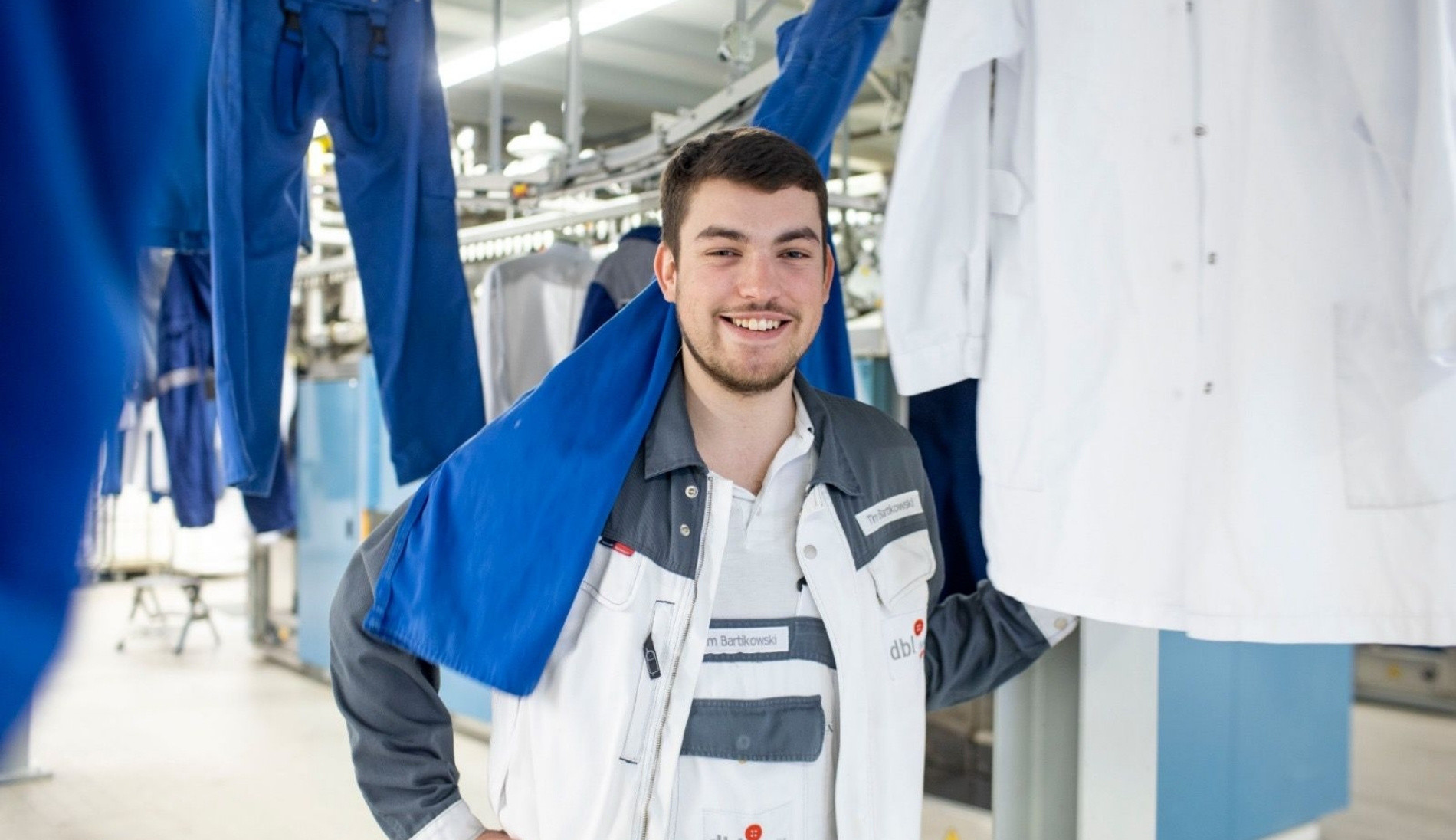
Textile cleaners are skilled professionals in the field of professional textile care. They clean, care for and finish textiles – from surgical linens in hospitals and hotel bed linen to workwear for industry, police and fire services. They work with modern technology, ensure hygiene where it is vital, and actively contribute to sustainability. In short: a crisis-proof job that combines true craftsmanship with high-tech solutions.
Can I Work in Textile Care Without a School-Leaving Certificate or Switch Careers?
Yes, training as a textile cleaner is possible even without a formal school-leaving certificate – there are no mandatory entry requirements. In textile care, motivation, reliability and attention to detail are often far more important than formal qualifications. Changing careers and entering the textile care sector is straightforward: many companies hire untrained staff and offer vocational training or further qualifications, ranging from advanced specialist training to a master craftsperson qualification or even a degree. Employers often also support staff in gaining additional qualifications or completing a school-leaving certificate. If you have previously worked in a different field, moving into textile care can be an excellent opportunity for a fresh professional start. In addition, the Federal Employment Agency and the German Pension Insurance fund retraining programmes to become a textile cleaner, particularly in cases of health-related career changes.
Am I Too Old to Start a New Career in Textile Care at 50+?
No! Many companies value older employees and greatly appreciate the experience they bring. Thanks to modern technology, working in textile care today is far less physically demanding than it used to be. Career changers aged 50+ are often even offered permanent contracts. In addition, retraining programmes are available through the Federal Employment Agency, provided certain requirements are met.
Do Women Also Work in Textile Care?
Of course! The proportion of women in professional textile care has traditionally been high. Women, just like men, work in all areas of laundries and textile cleaning services – from laundry operations and technical roles to management positions. Modern technology has reduced the need for heavy lifting, while the job remains physically active, as it involves being on your feet and moving around for much of the day.
Apprenticeship as a Textile Cleaner: Process & Requirements
In this section, you’ll find out how to become a textile cleaner – from training companies and vocational school to internships and taster days.
Where can I do an apprenticeship as a textile cleaner?
You can apply directly to local laundries, dry cleaners (including chemical dry cleaning services) or textile service companies. Many businesses offer taster days, trial weeks, internships or holiday jobs. Local Chambers of Crafts and the Federal Employment Agency can also provide information about training companies in your area. Vocational schools for textile cleaners are currently located in Berlin, Frankfurt am Main (Anni-Albers-Schule), Hanover (Anna-Siemsen-Schule), Neumünster (Theodor-Litt-Schule) and Greifswald (Regional Vocational Education and Training Centre) (as of 2026).
How does the apprenticeship work?
The official recognised training occupation is “Textile Cleaner (m/f/d)” and it usually lasts three years. It is a dual vocational training programme, combining practical work in a company with lessons at a vocational school.
- Practical training in a company: Work in laundries, dry cleaning businesses (including chemical cleaning) or textile service companies
- Theoretical training at vocational school: Subjects include textile science, hygiene management, machine operation, chemistry, environmental protection, and business & social studies
- Examinations: Intermediate exam after 18 months; final exam at the end of the apprenticeship
- With good performance, the training period can be shortened to 2.5 years
Where can I find internships, apprenticeships and job vacancies in textile care?
You can find apprenticeship positions for textile cleaners by searching online for “laundry” or “dry cleaner” plus your city. Many companies offer taster days or trial weeks. Large textile care chains operate nationwide. Hotels and hospitals often have their own laundries and regularly recruit staff. You can also find vacancies on the following platforms: Federal Employment Agency, Chambers of Crafts, Indeed, StepStone and LinkedIn. Life hack: Many companies welcome unsolicited applications – simply give them a call or visit in person to get an impression of this interesting and varied profession.
A Typical Day as a Textile Cleaner
Here’s what your everyday working life as a textile cleaner looks like – from workplaces and working hours to physical demands, workwear and teamwork.
What workplaces and areas of work can I expect in textile care?
As a qualified textile cleaner, you can work in almost all areas of the professional textile care industry from small dry cleaners serving private customers with direct customer contact, to medium-sized family-owned businesses, to large textile service corporations that primarily serve commercial customers:
- Hospital laundries
- Hotel laundries
- Industrial laundries
- Laundries for nursing homes and care facilities
- Textile service providers for workwear, fire brigade/police uniforms or rental linen
What are the working hours in a laundry?
Many companies operate a two-shift system (e.g. 6 a.m.–2 p.m. / 2 p.m.–10 p.m.). Weekend and public holiday work can occur in textile care, but it is not the norm. In hospital laundries, during public holiday periods, or in businesses with strong seasonal peaks – such as ski resorts or coastal regions – weekend shifts may be required. Overtime is usually compensated with time off or additional pay. Part-time work from 20 hours per week is also possible in many companies.
How physically demanding is the work in textile care?
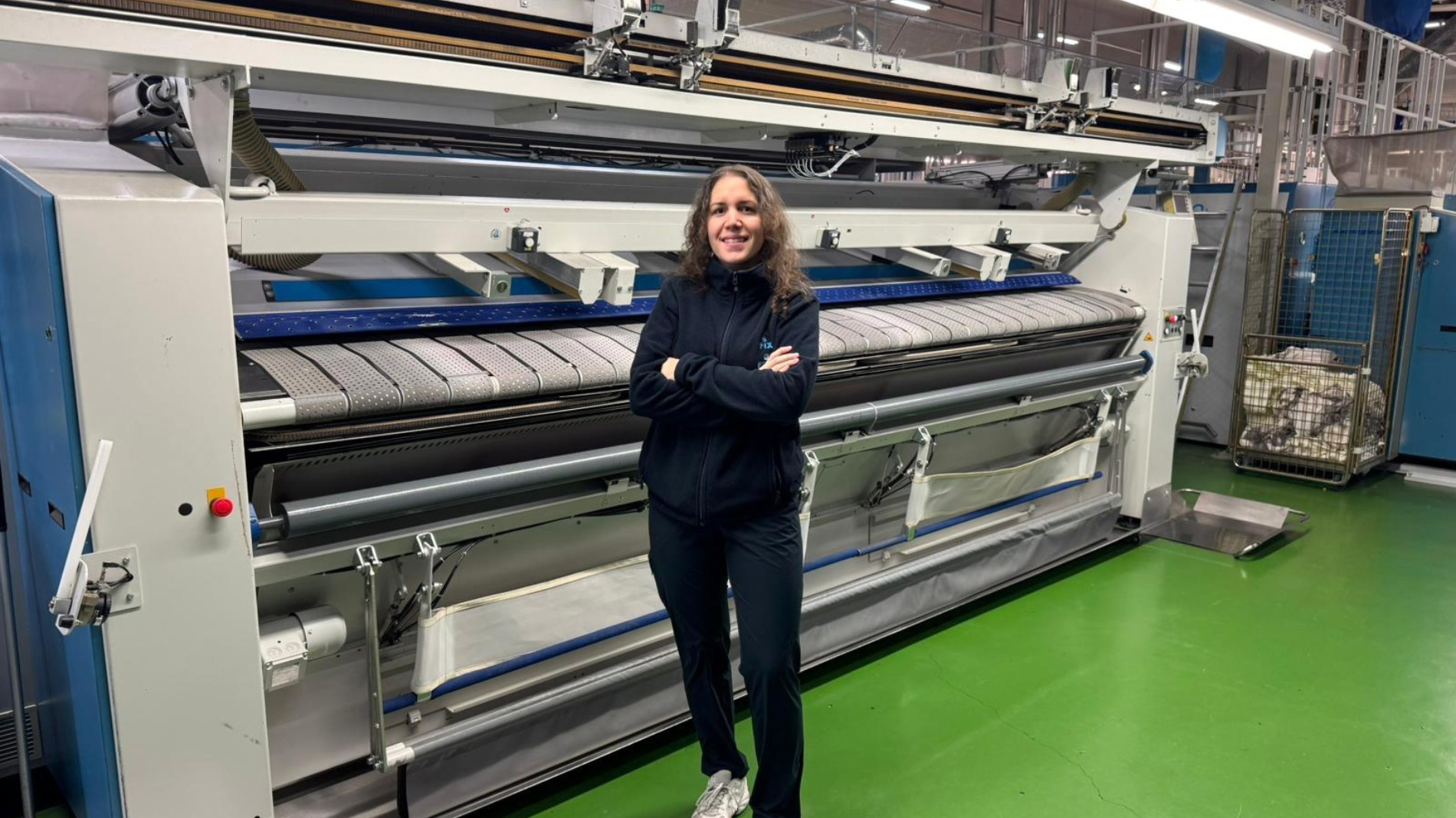
The work is active, but thanks to modern technology and automation, it is no longer as physically demanding as it used to be. Heavy laundry bags are transported using pallet trucks, lifting systems or conveyor belts. Most machines are set at ergonomic working heights. You spend a lot of time standing and moving, but after a few weeks, most people are used to the routines. A job in textile care is particularly suitable for people who enjoy practical work and are looking for a secure career with future prospects.
Can I work from home in textile care?
Some roles can be performed remotely, such as customer service, route planning, quality management or administrative tasks. After initial on-site training, certain office-based duties can sometimes be carried out from home – especially in larger companies. However, the main area of work is on-site, where you collaborate closely with your team.
Will I be provided with workwear?
Yes, workwear is almost always provided free of charge. You will usually receive several sets of clothing, often including safety shoes. Professional cleaning of the workwear is typically handled by the employer.
Safety, Health & Environment
This section covers occupational safety, handling chemicals, and the contribution of professional textile care to environmental and resource protection.
Is working with chemicals in laundries dangerous?
No. In everyday work, textile cleaners rarely come into direct contact with chemicals. Modern detergents are automatically dosed and meet high environmental standards. Solvent-based machines operate in closed systems. All employees receive safety briefings and, where necessary, protective equipment. Regular health checks are also an important part of occupational safety in many companies.
What does textile care do for the environment?
Professional laundries are significantly more resource-efficient than washing at home – using up to 50% less water and around 30% less energy per kilogram of laundry. The textile care industry also plays a key role in the circular economy: textiles are reprocessed and repeatedly returned to use, reducing waste and the need for new production. Many companies also recycle water and use heat recovery systems or photovoltaic installations. In this way, your job actively contributes to environmental protection.
Expert support
This FAQ was created with the kind support of subject-matter experts from the German Textile Cleaning Association (DTV) and the Quality Association for Responsible Textile Services (GG).
Recruiting for Textile Care
Would you like to use the FAQ for your recruiting activities? Get in touch with us at: textilecare@messefrankfurt.com