
Reading time: 5 minutes
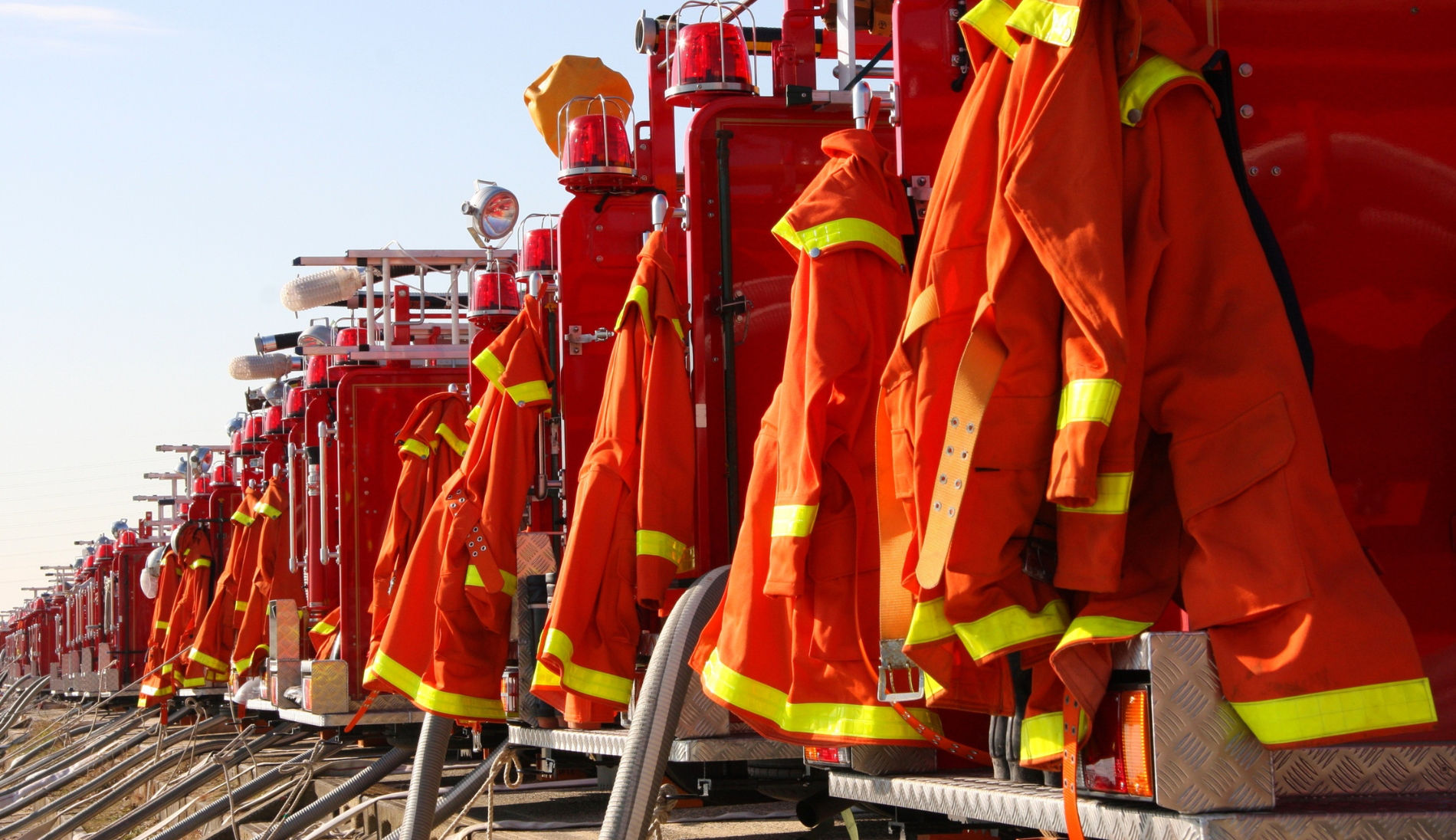
People working in the emergency services and firefighters wear highly complex, multifunctional protective clothing in their daily work, for which a four-figure sum often has to be invested. Yet despite the high acquisition costs, the gear often becomes unusable sooner than necessary. “In many cases, the cause is improper drying,” says Lars Reuter.
The certified textile cleaning master and expert witness knows what he is talking about: for more than two and a half decades he has been involved in the reprocessing and decontamination of PPE for emergency services and fire brigades, conducts training courses, inspections and consultancy in this field, and is actively involved in the fight against firefighter cancer. In this interview, he explains why the drying process in particular is so demanding and why a properly executed procedure extends the service life of this expensive clothing.
Mr Reuter, how did you come to the conclusion that the drying process is the number one cause of destruction of high-quality protective clothing used by emergency services and fire brigades?
Lars Reuter: In my expert consultancy, I deal with complaint cases from this sector on a daily basis. More than 60 per cent of them are due to incorrect drying in a tumble dryer or finisher.
What kind of damage occurs as a result of improper drying?
Lars Reuter: Often, thermally bonded or coated components such as reflective strips or seams sealed with tapes are damaged. The cause is partial overdrying of the multilayer PPE. While the outer functional layer dries very quickly in the hot air, the inner layers require significantly more time. Residual moisture measurement in the exhaust air flow detects that the item is not yet completely dry and the process continues. However, the outer layer, the applied reflective strips and membranes are already fully dry, meaning that the “protective” evaporative cooling effect is no longer present at these points. As a result, the temperature continues to rise, ultimately leading to thermally induced softening of the reflective strips and delamination of the membrane and seam-sealing tape. The movement in the tumble dryer does the rest: friction abrades the already damaged coatings and tapes, rendering them unusable. The PPE has to be replaced.
Could this problem be eliminated by finishing the high-quality suits?
Lars Reuter: No. Based on my experience, neither a tumble dryer nor a finisher is suitable for properly drying the high-quality PPE of emergency personnel. In a finisher, it can even lead to “serial damage” if the drying temperature specified by the garment manufacturer is not adhered to. For drying multilaminate clothing, the finisher temperature has to be turned down. In an industrial textile care operation, however, waiting times are a disruptive factor, which means that a finisher may well be loaded with protective clothing prematurely. Because it is still too hot, the same effects occur as in a tumble dryer – with the difference that the garments are damaged while hanging due to overheating.
In which temperature range should the drying of multilayer protective clothing ideally take place?
Lars Reuter: The care label in the protective clothing provides information on the permissible drying temperature. Many items of protective equipment are marked with one dot in the circle symbol. This allows a maximum drying temperature of 60 °C, at which moisture evaporation occurs slowly. Other methods are also used, however. PPE is dried at 80 °C initially and then hung up to dry through completely. In this case, the reactivation of the water-repellent finish, which takes place at around 75 °C, has already occurred. This process must be carried out subsequently if drying has taken place at lower temperatures. In a tumble dryer, this can be done via a timed programme, which, however, is prone to operating errors.
What else must laundries consider if drying in a tumble dryer is unavoidable for technical reasons?
Lars Reuter: When drying in a tumble dryer, care must be taken to turn the firefighting uniforms inside out and to load them into the drum in a closed condition. However, this requirement is far from always being consistently observed, meaning that fasteners incorporated into the PPE can cause mechanical damage – for example to the membranes. For this reason as well, I can only advise against putting high-quality protective uniforms into a tumble dryer.
Another rule is to load a tumble dryer only with similar garments of the same weight class, which requires careful sorting of the items. A random mix of different qualities inevitably leads to overdrying of lighter uniforms, because padded protective clothing takes considerably longer to dry.
What is the best way to avoid the types of damage you have described?
Lars Reuter: Drying without mechanical stress is possible, for example, in a heated drying room equipped with a dehumidifier. However, the PPE must then be post-treated for a few minutes at 80 °C in order to activate the water- and oil-repellent finish. The ideal medium for drying protective clothing and reactivating its impregnation is, however, a drying cabinet. There is sufficient space between the hanging uniforms to allow warm air to flow through them and remove moisture without overdrying the textiles. When the air at the cabinet inlet and outlet is at the same temperature, the items are dry. They then remain in the cabinet for a short time at 80 °C to activate the impregnation.
Another unbeatable advantage of a drying cabinet is its wide range of uses. Protective gloves and operational boots can be placed or mounted on special holders and shelves, where they are dried reliably and evenly.
Despite adherence to all process parameters, complaints still occur. What advice can you give to processing companies to prevent this?
Lars Reuter: For several years now, I have observed a reduction in material thickness in some types of protective clothing. In wildland firefighting, for example, extremely thin qualities are now being used. These tend to overdry immediately when exposed to warm or hot air. To avoid damage, the manufacturer’s information must be studied carefully and complied with. This naturally applies to all protective clothing.
Problems can also arise with new deliveries of uniforms. Even if it is a repeat delivery of a long-established item, I always recommend taking a look at the care instructions and manufacturer information, as well as carrying out an additional, thorough inspection of the batch. Although one should be able to assume that reorders correspond to the original order, practice repeatedly proves otherwise.
The number of companies processing operational uniforms and similar items is increasing, as is price competition in the market. What impact does this development have?
Lars Reuter: First and foremost, it should be clear that the equipment of emergency services and fire brigades serves occupational safety and the preservation of employees’ health. PPE must function properly so that it does not itself become a risk factor. Reprocessing must be guided by this principle, not by price. Anyone offering professional reprocessing of highly functional, multilayer protective clothing should therefore pay attention to optimal care, drying and final inspection of the PPE’s functional performance, and be aware of the costs of these processes. It quickly becomes apparent that the proper care of a firefighter’s suit comes at a price. Cheap offers have no place in this field!
Thank you very much for these insightful perspectives on drying multilayer protective clothing.