
Reading time: 4 minutes
Textile service providers supply their customers with laundry from their own facilities across a defined service area, which may vary in size. To maximise efficiency, delivery routes are carefully optimised, often with the help of route-planning software. Nevertheless, there are always customers located far away from any regular route and/or those renting only small quantities of textiles or sending limited volumes for processing. In such cases, the cost-benefit ratio for the textile service provider is hardly viable, as rental prices are generally calculated according to fixed tariffs and standard price lists. The industry is therefore keen to find alternative ways of transporting these items to customers more efficiently.
Laundry Delivery via Parcel Services
One alternative that some textile rental service providers are testing for transporting small laundry volumes to remote or difficult-to-reach delivery locations is outsourcing logistics to parcel service companies. These providers deliver clean textiles to the customers of the textile service operator and, where required, collect soiled laundry for return to the textile care facility. This principle has already become established in sharing concepts for fashion, evening wear and maternity clothing many years ago. Private consumers subscribe to a rental service and, for a fee, can order a set number of garments from the provider’s collection online each month. The items are then delivered via parcel service. Depending on the subscription model, the worn clothing is either collected by the rental company or returned by customers in a provided bag.
What appears at first glance to be a win-win situation for all parties involved depends heavily on the reliability of the parcel service provider. While delivery delays are less critical in monthly subscription models, they can have serious consequences in weekly delivery cycles, which are common in the workwear sector. Employees may have to wear garments requiring reprocessing for longer than intended, which in the case of protective clothing could even constitute a breach of the employer’s duty of care. As a result, repeated late deliveries are likely to cause frustration. Several companies within the textile services industry that had already entered partnerships with parcel service providers have since discontinued these arrangements due to reliability issues, reduced them to a minimum, or now use such services only for non-urgent internal goods transport.
Delivery by Air
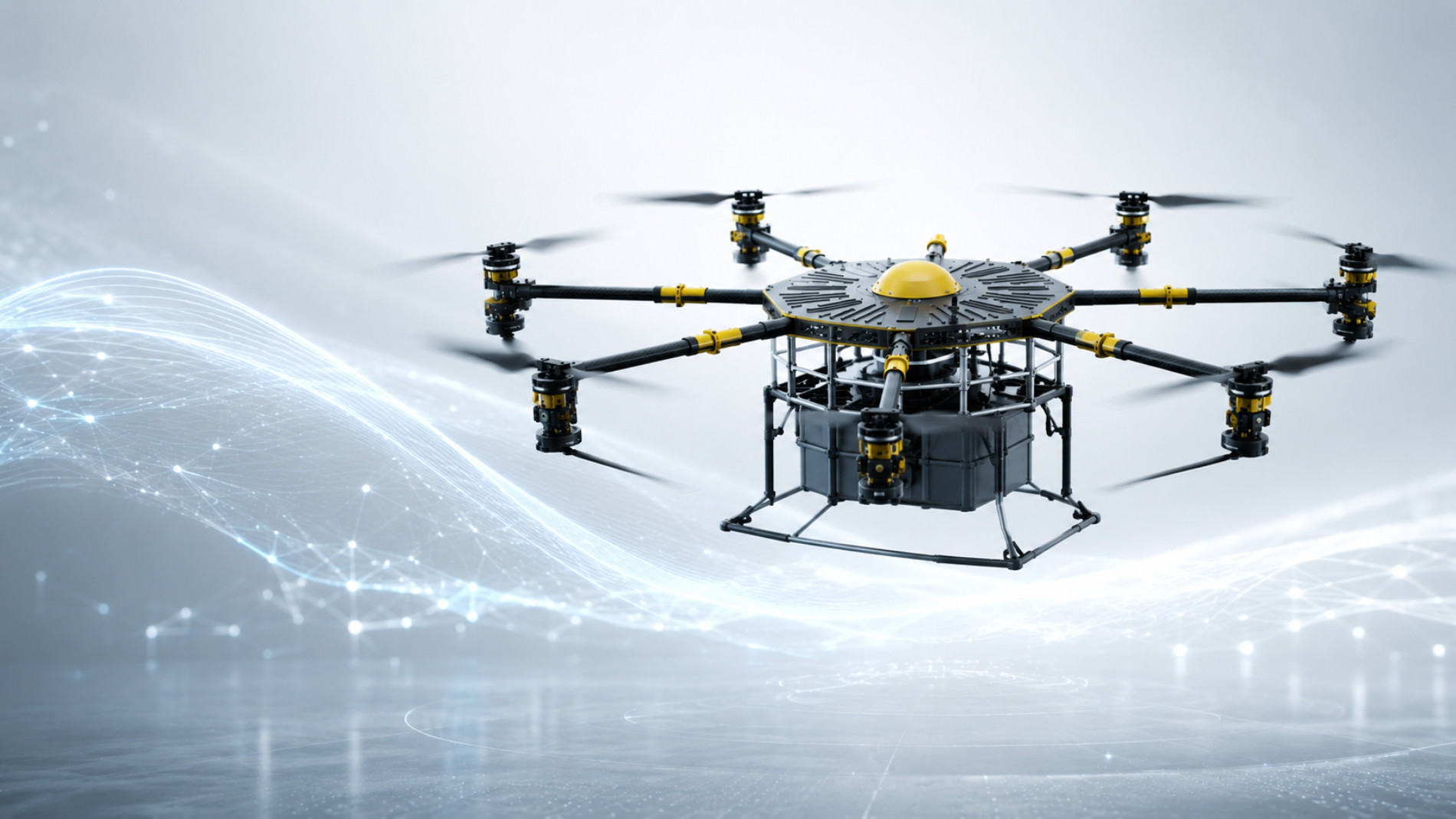
Among the latest and most widely discussed alternatives in delivery logistics are commercial drones and cargo drones. These systems are specifically designed for the efficient and rapid transport of goods and are already being used for the delivery of medical samples, blood supplies and similar items. In addition, drones can easily fly over difficult terrain and, with payloads of up to 300 kilograms in the case of heavy-lift drones, can reach locations previously considered inaccessible. However, autonomous transport systems suitable for such purposes are subject to strict regulations within the EU. These include requirements for obtaining an operating licence and pilot certification. In addition, extensive safety measures must be observed. Flight routes must comply with national aviation regulations governing flights over public infrastructure such as ports, airports and motorways, as well as buildings related to civil security, including police stations, fire brigades and correctional facilities.
Even once a company has received approval to operate a transport drone, the technology itself limits the delivery range. Since battery capacity is restricted, drones cannot remain airborne indefinitely. The use of transport drones therefore requires precise logistical planning that takes both outbound and return flights into account. It must also be ensured that laundry is delivered to the correct recipient, properly received and signed for, and that soiled textiles are securely loaded into the drone for return transport. Both aspects can prove challenging. For example, if several customers of a textile service provider are located within the same building complex, clear procedures are needed to determine who receives the clean goods, when and where delivery takes place, and how the items reach their final recipient. The return of soiled laundry also requires customer training to prevent cargo from falling out during transport. Although commercial drone liability insurance is mandatory in Europe, it remains unclear whether such operational scenarios can be fully covered under existing insurance policies.
Service Drivers Remain Essential to Customer Communication
Despite all the advantages that parcel services and drone deliveries may offer, both systems lack one crucial element: personal contact with customers. Yet this interaction is a fundamental part of textile rental services. In many cases, this role is fulfilled by the service driver. During the delivery and collection of laundry, service drivers establish a personal relationship with customers and often receive valuable information that can influence strategic decisions within the textile service company. Outsourcing logistics to third parties, however, completely removes this communication channel. The consequences usually become apparent quite quickly: customers grow dissatisfied and the informal flow of information dries up. Several companies within the industry that outsourced their delivery logistics to external providers soon regretted the decision and brought their vehicle fleets back in-house. It therefore seems highly likely that the important role of the service driver will continue to remain indispensable in the future.
| New Transport Methods | Advantages | Challenges |
|---|---|---|
Parcel Services |
|
|
Drones |
|
|