
Reading time: 6 minutes
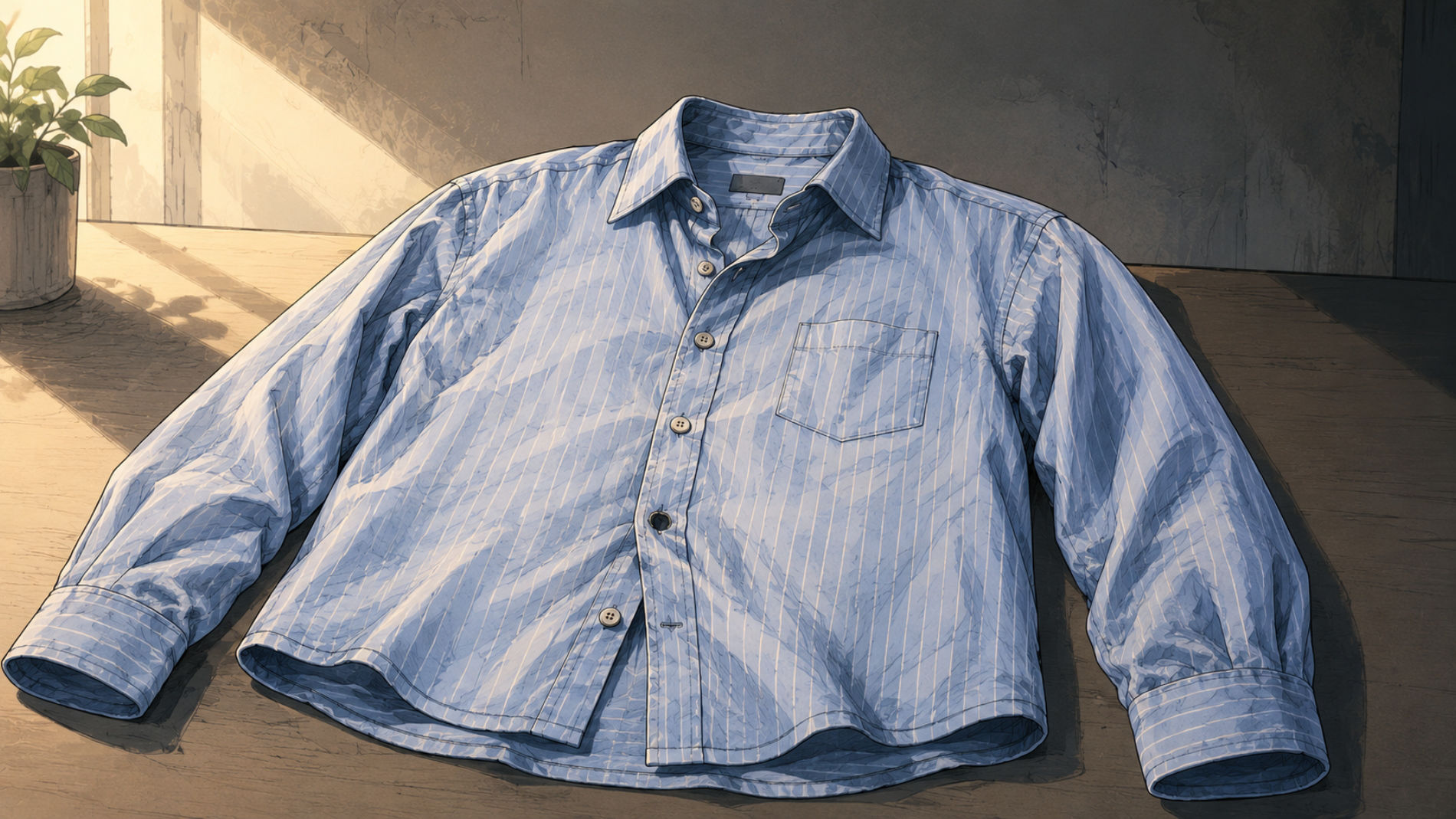
Hello! My name is K-Ro, I’m a shirt and I belong to Peter. We moved a few days ago and now live in a sunny room at the Weserwiese care home. We also have a small bathroom, but there isn’t enough space for a washing machine. Which is why Peter was told that from now on, a specialist would take care of his laundry. All he has to do is gather together the clothes he has worn, and full-service laundry provider bardusch in Siedenburg will do the rest. With these words, he was handed a laundry bag bearing a printed tag with his name, the name of the care home and a barcode.
Bagged up and off to Siedenburg
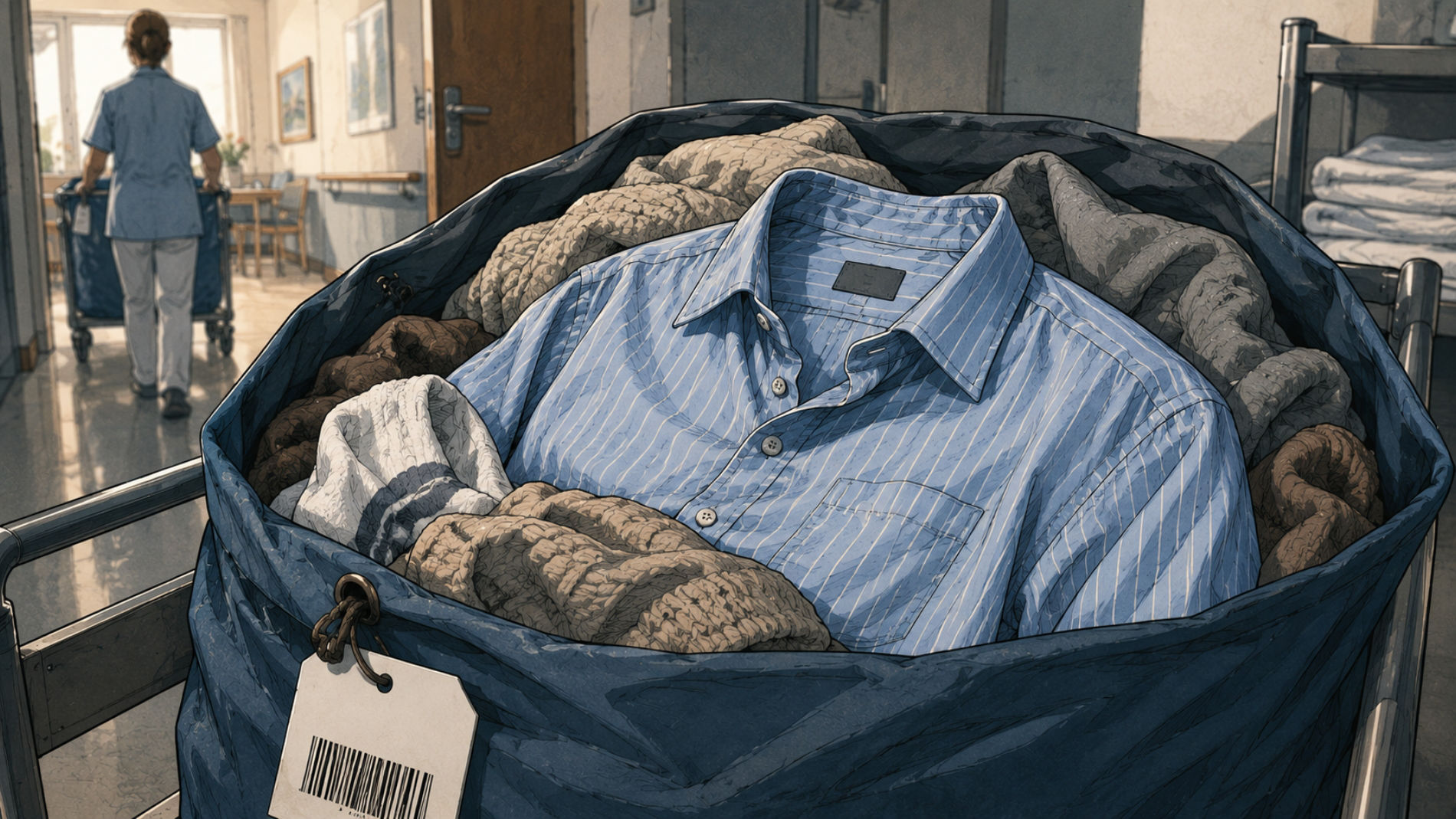
Peter has been diligently collecting his dirty laundry ever since we moved in, and now I, too, am in the bag together with several different colleagues. Apparently, we’re going to be picked up any minute now. And, sure enough, we’re off and being pushed in a laundry trolley through the whole home – and stopping at a lot of rooms along the way. Actually, it’s starting to get a bit cramped in the trolley, as bag after bag is piled on top of us. And some of them are really heavy! Who knows what’s in them? Now, it seems that all the laundry bags have been collected because we’re heading towards the exit. The air is much better now. But what’s going on? It’s suddenly gone completely dark and we’re being jolted about. Rumour has it, we’re heading towards Siedenburg. And, indeed, after several stops, our laundry trolley is wheeled into an extremely long building, which proudly proclaims its owner, bardusch, in large blue lettering.
Through the plant by barcode
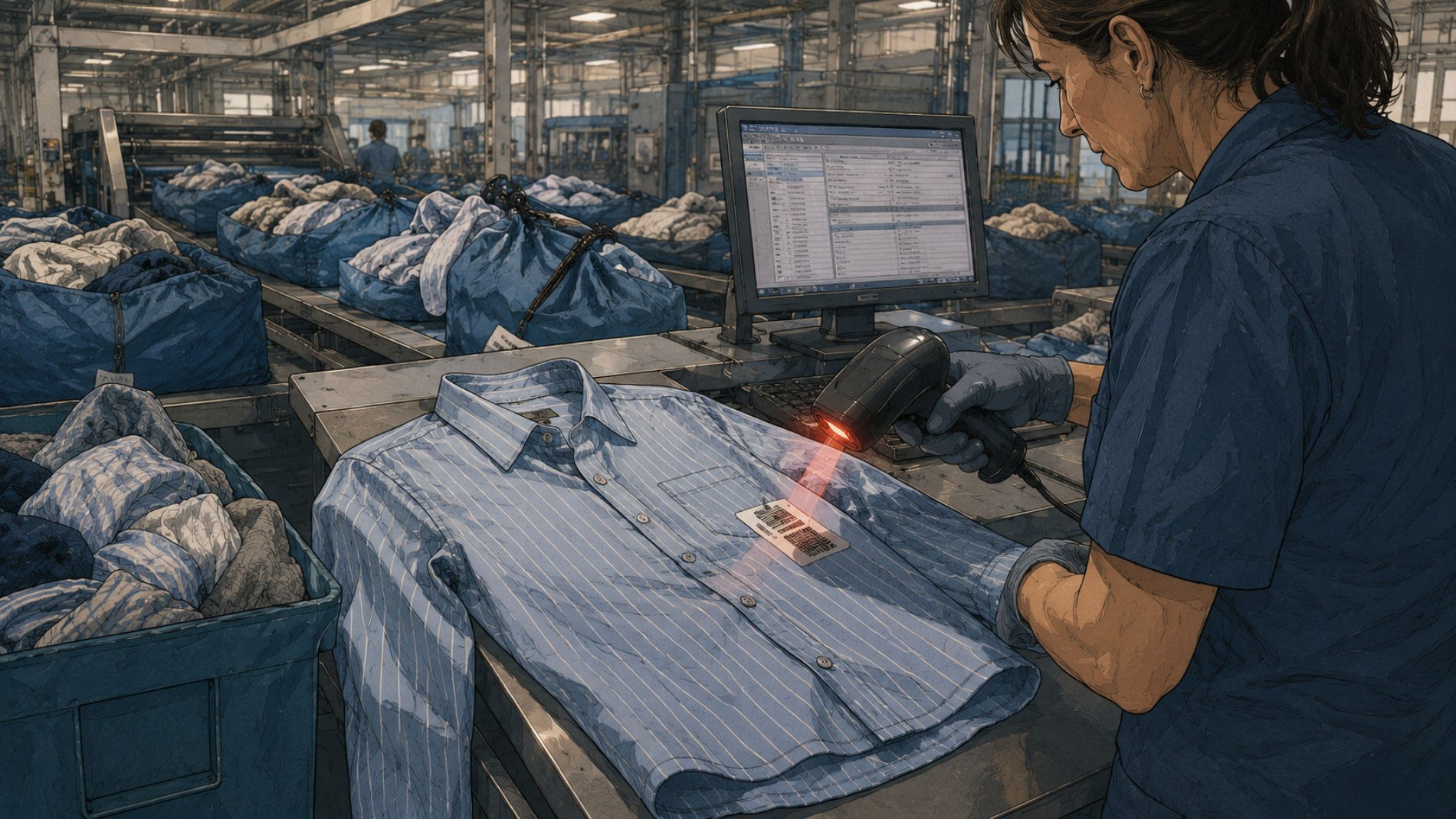
Our container comes to a stop in front of a massive pneumatic tube system. Shortly afterwards, a man puts one laundry bag after another into a couple of pneumatic tubes. It’s fun! It feels like going down a giant slide. However, it goes up rather than down and ends with a hard landing. Then someone opens our bag and we’re shaken out onto a table. “Hello, I’m new here!”, I want to call out to the friendly lady, but she already knows. She examines me closely, which makes me feel slightly embarrassed, as I’ve been missing a button in the stomach area for quite some time. She notices it straight away and types something into her computer. Then she looks at the care label, types something else into the computer, picks me up, and suddenly my back feels warm. I have no idea what’s going on here. But after my mates have gone through the same procedure, I see that we’re all suddenly wearing a label with Peter’s name and that of the home, as well as lots of lines. It’s called a barcode, I gathered from a conversation among the staff at the sorting station. To me, they all look the same. But there must be differences that a scanner can detect. Why else would the lady at the sorting station scan the code of every single one of our batch? It seems to contain all the information about the processes we can expect. And it’s probably also responsible for my fellow travellers and I disappearing into different chutes after we’ve been dropped onto a breathtakingly fast conveyor belt.
The individual items remain together
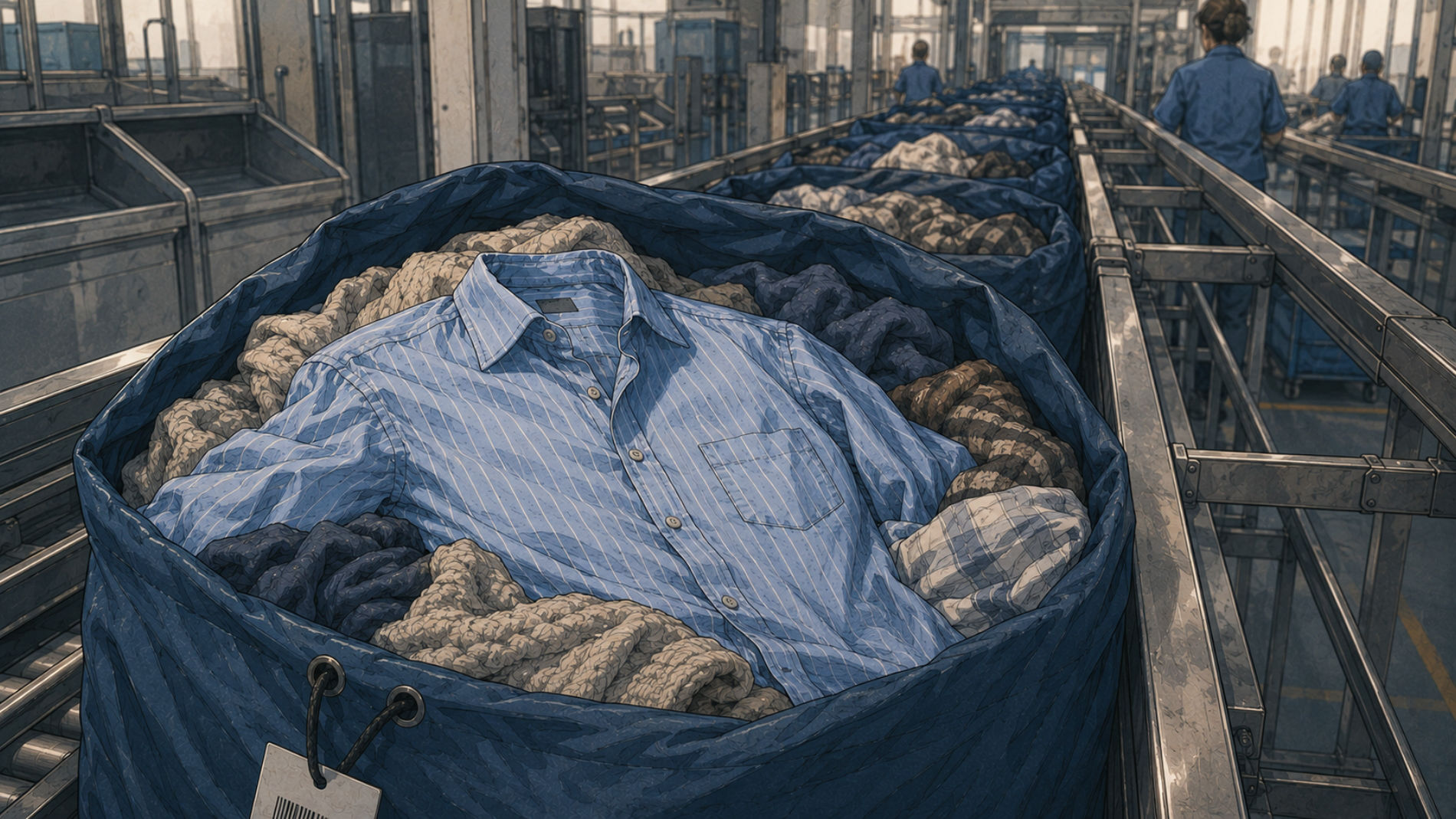
Now I’m back in a laundry bag again … I know my immediate neighbour – we met before at the care home. The others, my neighbour tells me, are also from the same establishment. Incidentally, we’ll be continuing our journey through the plant together because, in Siedenburg, laundry from the same care home always stays together. Of course, it can happen that the odd item of clothing has to do an extra lap. But a day later, these items will also be returned to their owners.
Washed at 40°C with a gentle detergent to protect fabrics
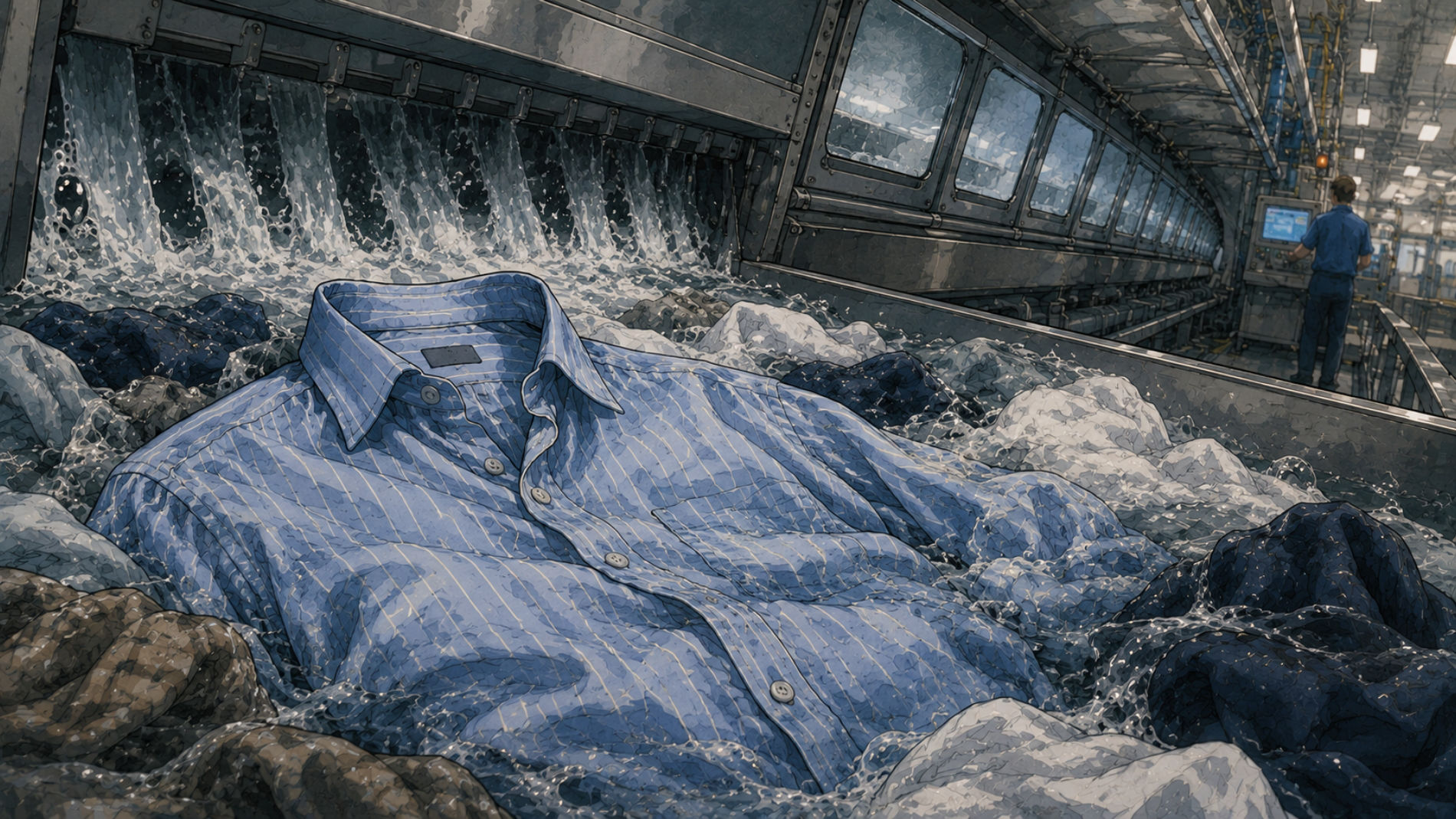
I've been in the container for a few minutes now and have had a chance to familiarise myself with my surroundings. Right next to me is a conveyor belt with big, partitioned compartments. I once saw something similar at the Zollverein Coal Mine in Essen – except it was longer and had smaller compartments for iron ore. The conveyor belt leads to a huge steel tube. I can also see three enormous washing machines. And a large, white cupboard with a porthole, above which is a sign saying, ‘Dry Cleaning’. In front of the cupboard is a laundry trolley piled high with woollen jumpers, hand-knitted socks and silk blouses. To which of these monstrous machines will my journey take me? The question is soon answered when a man picks me and all the other items out of our container and puts us on the conveyor belt. This then whisks us straight to the tube, which turns out to be a washing machine in continuous operation. And before I know it, we’re tumbling into it. Although it’s pitch black in here, it’s also a comfortable 40°C. The added ingredients (detergent) are also rather agreeable because they remove the stains caused by Peter being a bit clumsy at lunch recently. Moreover, from what we hear here at the laundry station, any microorganisms and germs will have been eliminated by the end of the process.
Automatic drying, finishing and folding
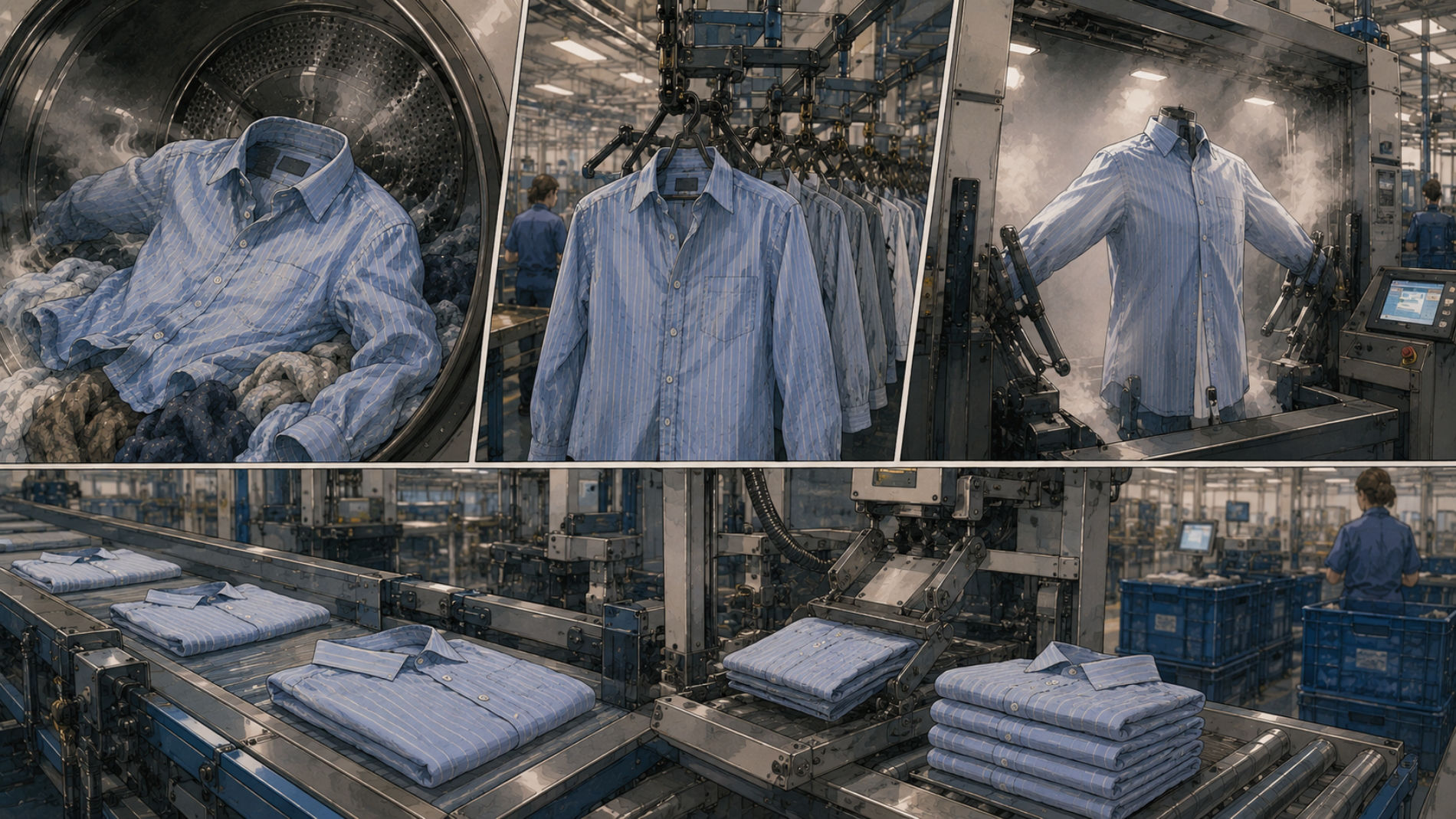
After nearly three quarters of an hour, I can finally see light at the end of the tunnel! But what’s going on? We’re being put straight into a centrifuge – which spins us round and round until there’s hardly any water left in us. Then, although I’m feeling quite dizzy, we’re dumped onto the next conveyor belt. I’m really hoping things will calm down now. Unfortunately, that’s not to be – we’re heading straight for a massive tumble dryer, into which we promptly vanish. At least it’s warm there but, oh dear, it’s getting hotter and hotter! When I come to again, we’re lying in a heap on a conveyor belt. Standing around us are several women who pick us up one by one and put us on hangers. Then, with a flick of the wrist, we are sent through a pincer-like contraption, which they call a ‘Lobster’, and embark on a journey along what looks like a single-track model railway. As we pass the monitors hanging at the various workstations, I catch a glimpse of a message saying that our care home has now been processed and the next facility is due to follow. I look around in surprise. And indeed: lined up in front of me are only articles from the ‘Weserwiese’ care home. But suddenly the one in front of me turns off, while I continue straight ahead. Why is it getting special treatment and I’m not? Later I’ll find out that it had to do an extra lap in the so-called ‘Finisher’v, where it was hot and humid. So, I’m glad I was spared that ordeal because, in the long run, too much heat isn’t good for my complexion. However, I must admit that the ‘Finisher’ has a sort of fount of youth effect, as the one in front of me suddenly has significantly fewer wrinkles than before.
Laundry, sorted into boxes by residents
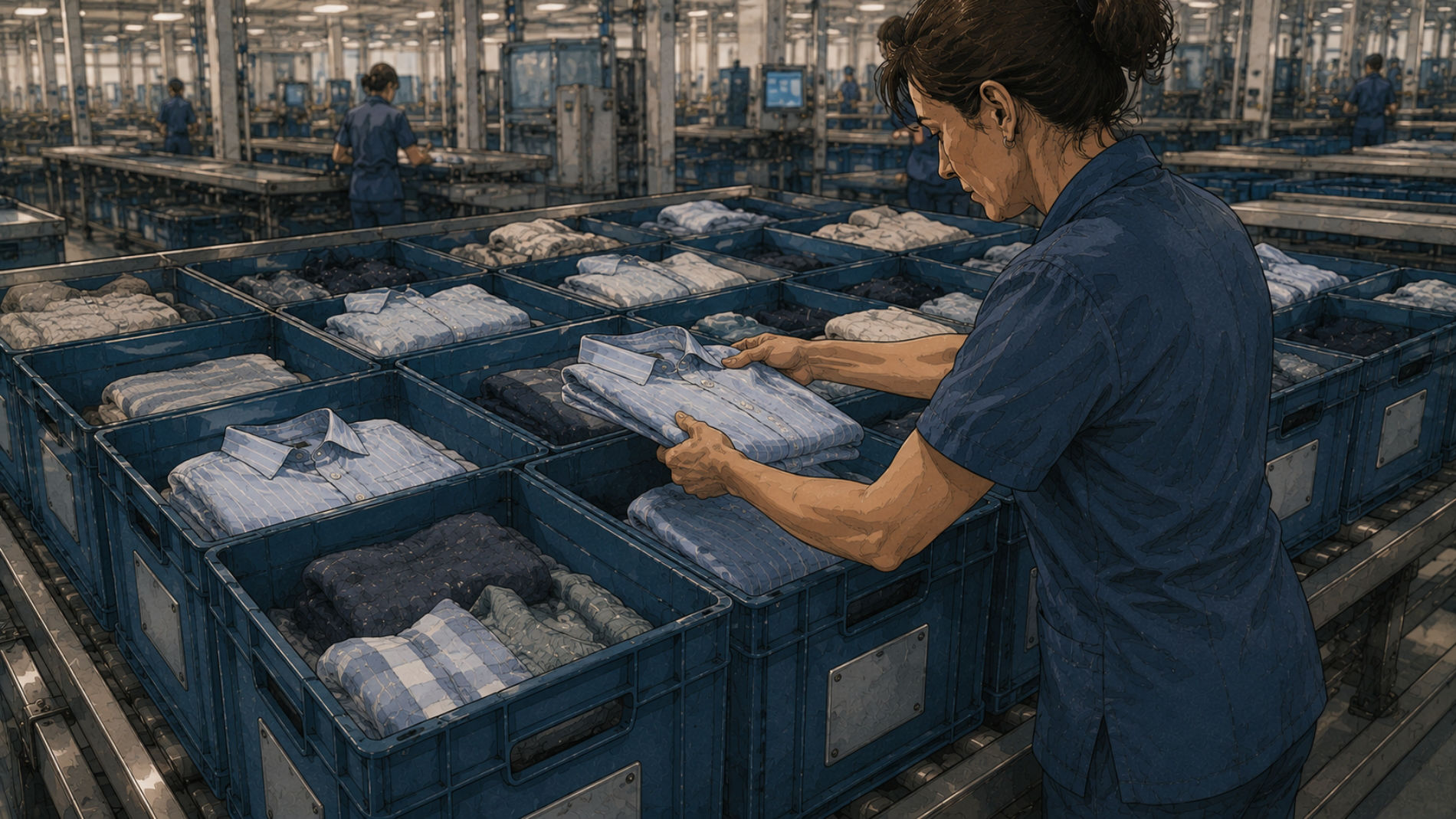
Although my journey has been quite interesting, I’ve had enough. I want to go back to Peter. As it turns out, however, that’s going to take a while because we’ve come to a stop in front of a folding machine, which irons and folds us fully automatically, one by one. And makes us look as good as new again. However, my delight is short-lived, for a frightening thought suddenly springs to mind: how do all the people at bardusch know where I belong? Then I remember the patch on my back. If it controls the processing, perhaps it also controls the allocation to the home and to Peter. And sure enough: after we’ve been sent to a sorting station, someone scans my barcode and puts me in a lift, which takes me straight to one of more than two hundred boxes, each of which is assigned to a specific resident. I got it right! In my box, I am reunited with all those articles of clothing who were with me in Peter’s laundry bag at the start. Now the socks and underpants are back too – the ones we’d been separated from at the ironing station and which, as they said, had been taken straight to the folding machine.
Neatly bundled and back to the care home
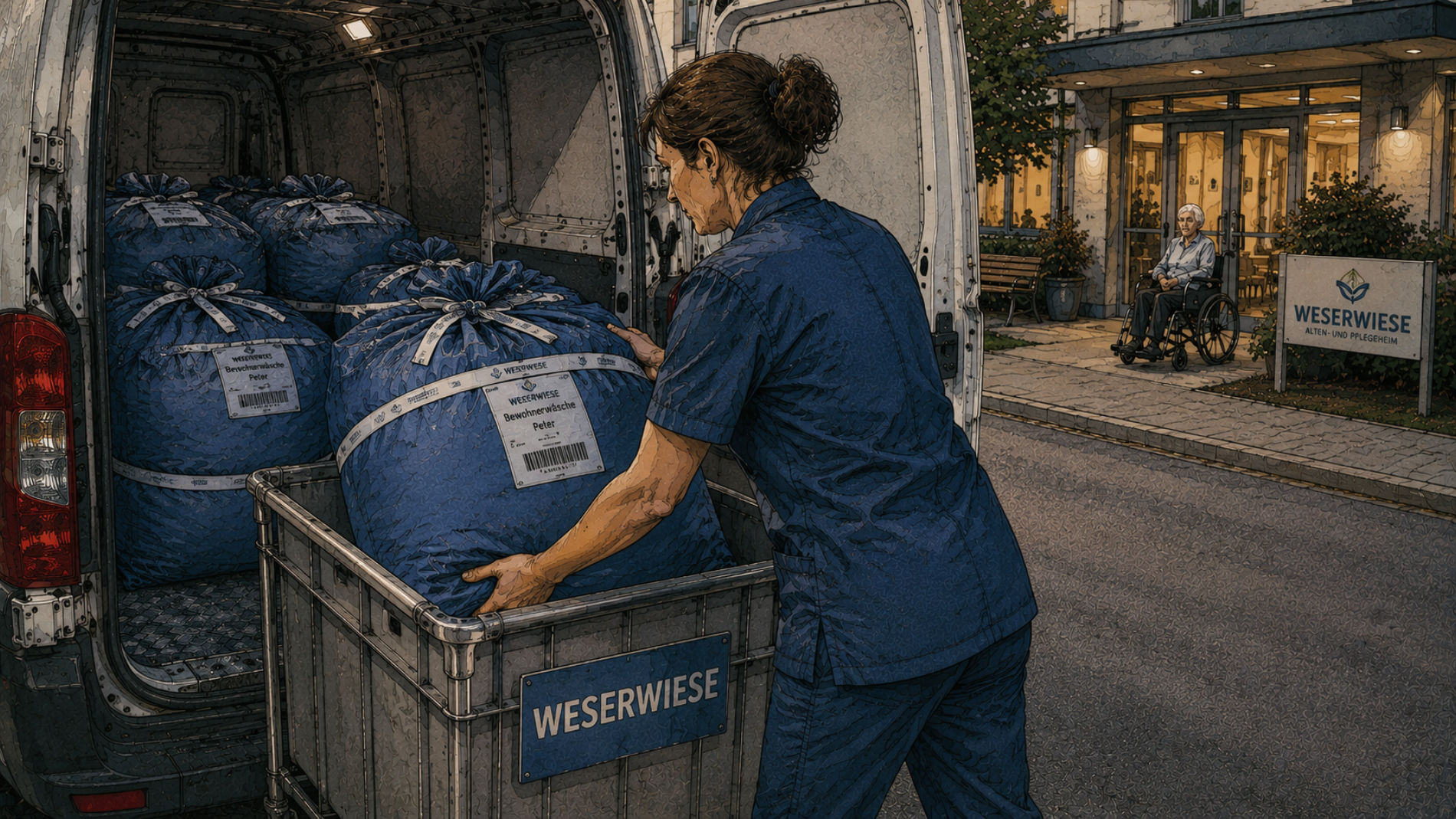
Leaving us no time to discuss our experiences, our box suddenly starts moving. We come to an abrupt halt in front of a lady who skilfully lifts our pile out of the box, eyes us critically, and makes sure we are all in shape. After making a few adjustments, she takes a laundry bag, stuffs us all inside, ties it up with two paper bands to form a neat little parcel, sticks a label on it and finally places us back into a laundry trolley with a sign reading ‘Weserwiese.’ Yippee, I think, we’re going back home to Peter! Unfortunately, I must be patient for one more night because it’s not until the following morning that the driver who picked us up, loads us into his van and takes us to the home, where the staff return us to our owners. Peter is delighted to see us back and even remarks that everything looks like new!
Bardusch GmbH & Co. KG
Bardusch GmbH & Co. KG is a family-owned international textile service provider headquartered in Ettlingen, Baden-Württemberg. Since its foundation in 1871, the company has been offering professional textile and hygiene management through a full-service leasing model. Bardusch supplies businesses in industry, skilled trades, hospitality, healthcare, care services and the pharmaceutical sector with workwear, protective clothing, flat linen and ward linen. The company operates more than 20 sites in Germany and other EU countries and has its own logistics fleet.