

Reading time: 4 minutes
The day-to-day business of textile service companies can be summed up in a simple formula: they supply customers in trades, industry, healthcare and hospitality with textiles. By definition, the sector therefore belongs less to the service industry and more to logistics: Dr E. Grosvenor Plowman described logistics as making the right goods available, in the right quantity, in the right condition, at the right place, at the right time, for the right customers, at the right cost. And this is precisely what rental laundries deliver: at scheduled times, they provide their customers with freshly laundered, ready-to-use textiles, collect soiled items, process them in-house, check quality, repair them or replace defective pieces. Finally, the goods are picked and delivered to customers exactly on time.
To ensure smooth operations, two logistical cycles are always running in textile rental services: internally, operational logistics manages the full control and allocation of goods, while delivery logistics—put simply—organises routes to customers and back to the facility. Established processes exist for both systems, but they are continuously evolving and must be adapted in response to technological and regulatory developments.
Mastering Data

The transformation processes within operational logistics are increasingly shaped by digitalisation and data generation. While internal processes in textile service companies have long been managed through the interaction of barcodes, chips or RFID transponders with reading devices ¬- handling large volumes of data-the growing level of automation, combined with the integration of sensors and artificial intelligence, is causing this volume to rise exponentially. As a result, the demands on information processing within textile service companies are increasing. Businesses will rely on ever more powerful IT resources and require stable internet connectivity. In addition, data security will play a central role - both to better protect against cyberattacks (which can also affect machinery) and to comply with national data protection regulations. Companies will therefore need more IT specialists, ideally with expertise in advanced analytics. Such tools analyse and interpret collected data, making it easier to develop predictive models and support strategic decisions (e.g. in procurement or risk forecasting). Data is also key to greater transparency in customer communication and more personalised services: apps can be used to share information that goes far beyond the processing status of an item.
Alternative Transport Solutions for a Positive Carbon Footprint

While the textile service industry must address the challenges of digitalisation on the operational side, increasing environmental regulations and requirements to reduce greenhouse gas (GHG) emissions are driving a rethink in delivery logistics. For example, under the Green Deal, the EU has committed to achieving a net-zero greenhouse gas economy by 2050. One key focus is the transport sector - more specifically, road freight - which accounted for nearly three quarters (73%) of transport-related GHG emissions in Europe in 2023.
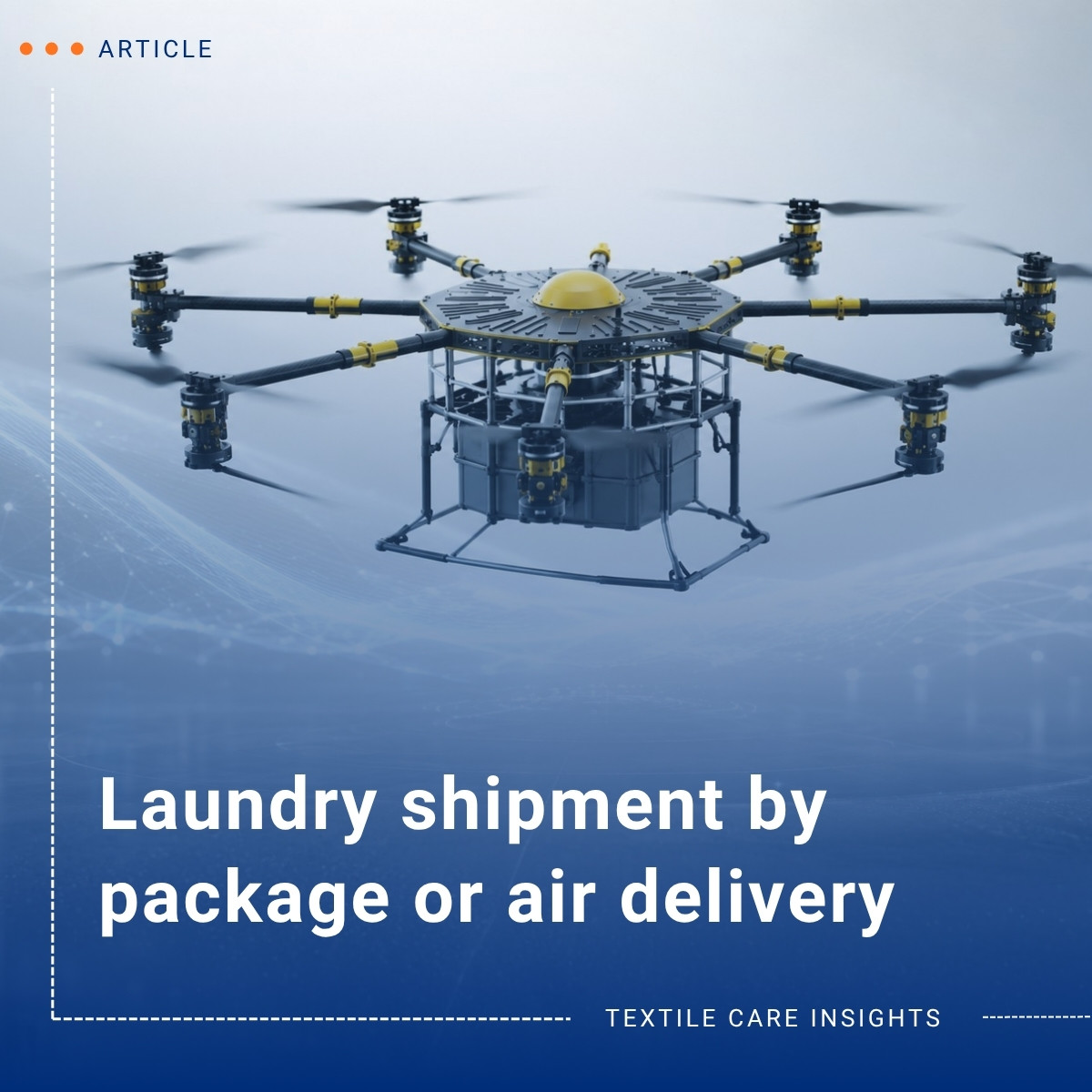
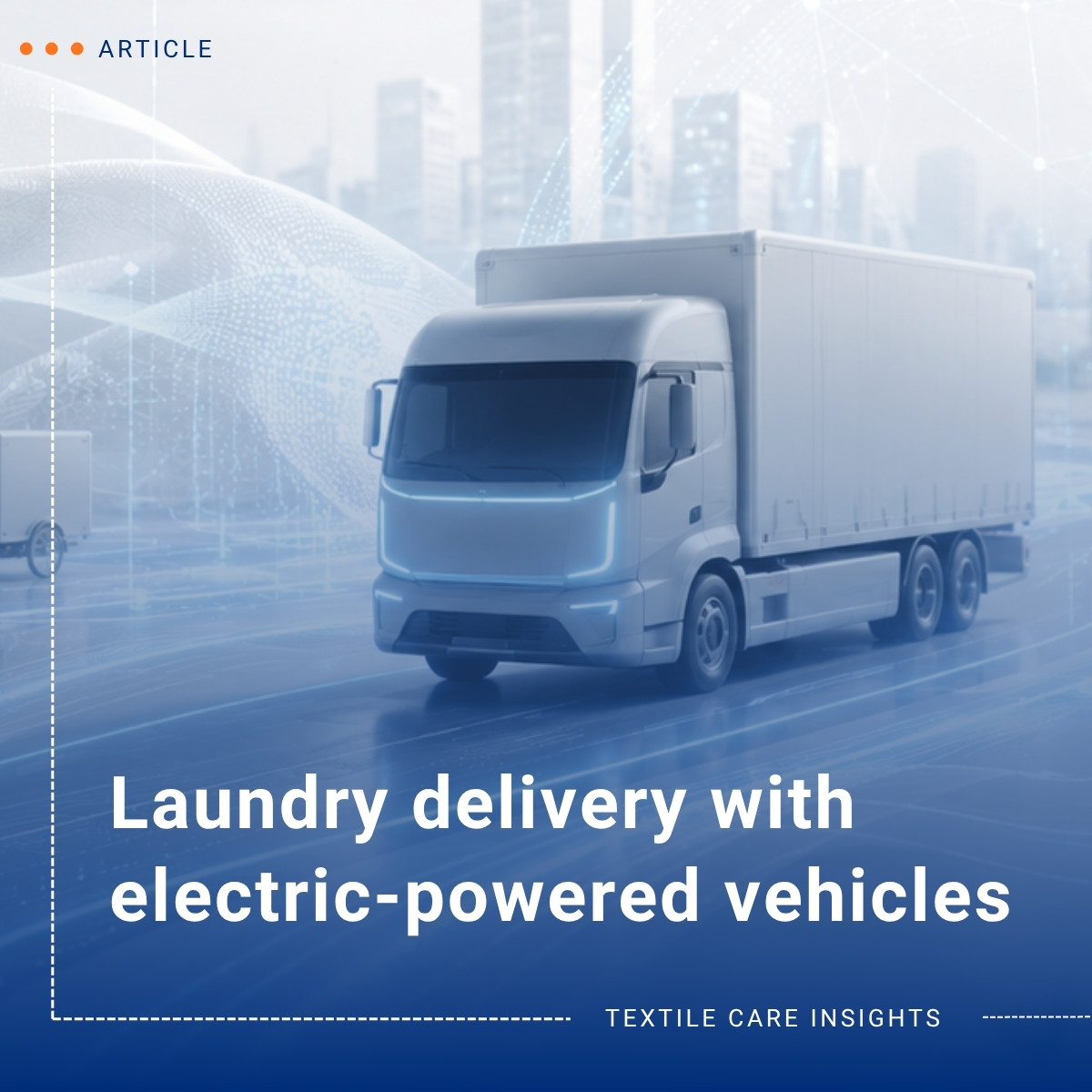
GHGs are produced by the combustion of petrol or diesel in the form of carbon and sulphur dioxide (CO₂, SO₂) as well as nitrogen oxides (NOx). They absorb thermal radiation, re-emit the energy and thereby contribute to global warming. At the international level, regulatory frameworks aim to halt the ongoing rise in global temperatures and decarbonise transport and other energy-intensive sectors. Textile service providers are directly affected: their delivery vehicles travel hundreds of kilometres on the road every day. As a result, a gradual shift away from combustion-engine vehicles is already underway, with fleets being converted to electric drive systems. In addition, companies are exploring alternative delivery solutions such as cargo bikes, drones, hydrogen-powered lorries or parcel service providers, and are launching pilot projects with these systems - especially as they offer further advantages. On the one hand, they enable access to and deliveries within urban low-emission zones. On the other, they help avoid traffic congestion and reach businesses located far outside standard delivery routes. Furthermore, reducing a textile service provider’s environmental footprint can positively impact the carbon balance of its customers in Europe: large companies with more than 1,000 employees are required under the Corporate Sustainability Reporting Directive (CSRD) to publish sustainability reports, including disclosures on Scope 1, 2 and 3 emissions -such as those generated through textile supply via rental services.
Customer Contact Requires Service Drivers

Changing transport regulations and the adoption of alternative delivery methods are leading to further adjustments within textile service operations. Factors such as vehicle range, load capacity, charging and parking space, as well as personnel, must now be taken into account in route planning and optimisation software. In addition, companies are developing their own on-site charging infrastructure, which may be combined with the installation of (emission-free) photovoltaic systems.
Another development likely to impact the sector is the introduction of autonomous transport systems. Driverless transport systems - also known as automated guided vehicles (AGVs) - have existed for decades and have been used in closed environments such as warehouses since the 1950s. The next step is their deployment on public roads. Initial pilot projects, for example involving remotely operated trucks, have already taken place in non-public settings. Such concepts promise benefits such as reduced staffing requirements and less congestion. However, it remains uncertain whether textile service companies will fully adopt autonomous delivery systems, as service drivers maintain the closest contact with customers. They are regular, familiar points of contact and gather valuable on-site information that might otherwise be lost. Despite ongoing technological advances, human interaction therefore remains indispensable in service delivery.