Reading time: 3 minutes
Key takeaways
- Laundries see during day-to-day operations which seams, zips, pockets and materials are subject to the most wear and tear.
- Bringing this experience into product development early can help ensure that garments and repair processes are better suited to industrial laundering.
- Examples from Lindström, CIRK-L and the Danish healthcare sector show how practical changes to fastenings and pockets can make garments easier to process.
- Collaboration can help extend the service life of workwear and conserve resources.
Worn fabrics, stressed seams and broken zips: industrial laundries see first-hand every day how workwear performs in use and over repeated washing cycles. By incorporating this essential knowledge into product development and design, manufacturers can make workwear easier to repair, extend its service life and conserve resources.
The challenge: workwear needs to do more than look good
Industrial laundries reveal which garments can withstand the demands of everyday use and which cannot. A zip jams, a seam comes undone, a pocket tears or the fabric loses quality through repeated laundering. These problems are not seen just occasionally; they emerge systematically over many washing and wear cycles.
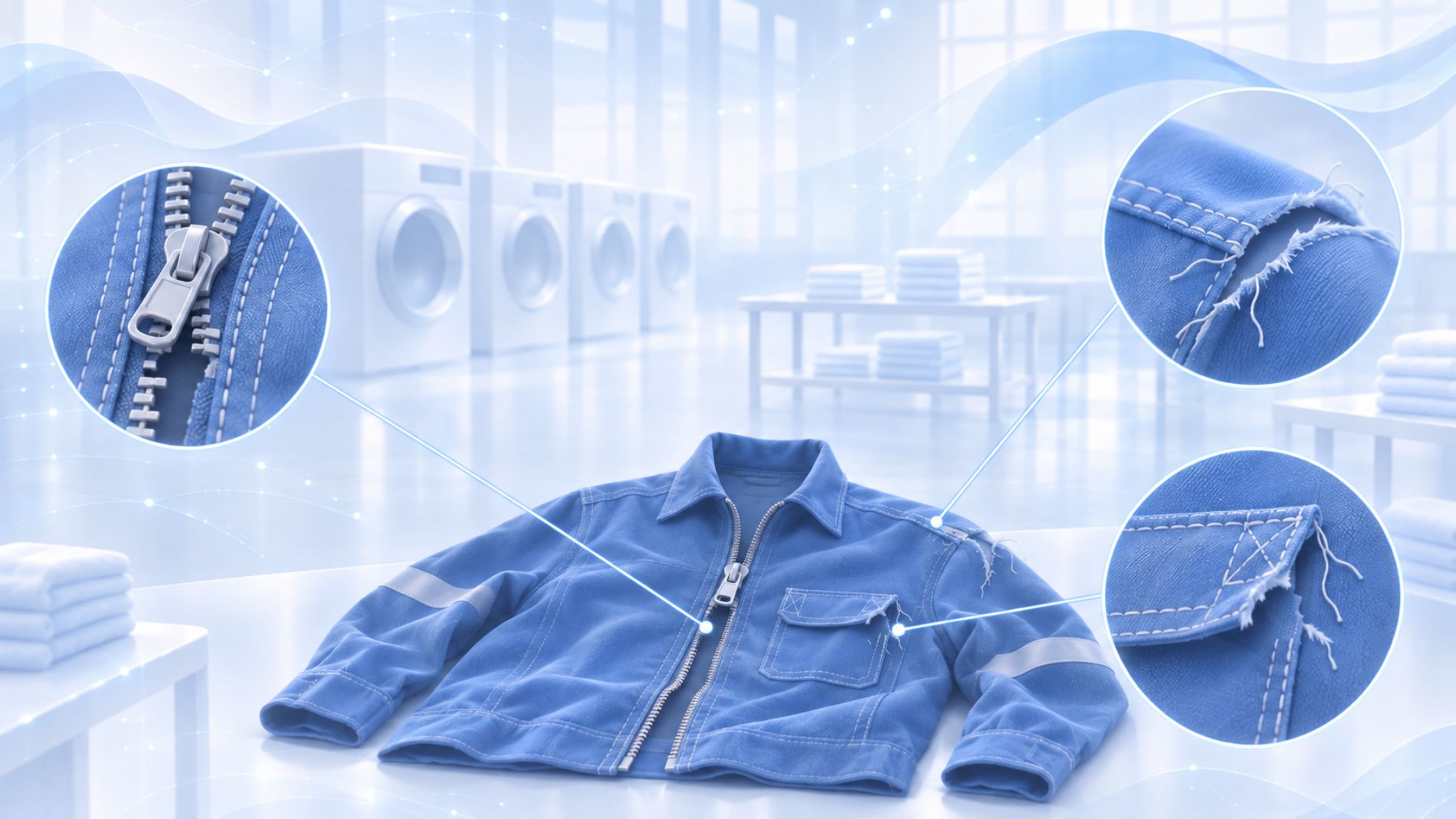
Each defect adds extra work: garments must be inspected and repaired before being returned to circulation. If a repair is not possible or economically viable, the garment has to be replaced. This increases costs and resource use.
The length of time textiles remain in use is a key factor. Figures from the European Commission underline this: around five million tonnes of clothing are discarded in the European Union each year, equivalent to approximately 12 kilograms per person. The potential of extending a garment’s useful life is highlighted by a Regional Sales Manager at Alliance Laundry Systems LLC, who estimates that increasing the lifespan of textiles by just 10 to 15 per cent could bring significant environmental and economic benefits (Mordor Intelligence, Global Professional Textile Care Industry, 2026; commissioned by Texcare).
Laundries already know why garments fail and which areas are subject to the most wear and tear, but manufacturers still make too little use of this knowledge.
Involve laundries early in product development
There is little benefit in involving laundries only once a garment is already in circulation. As active partners during the development phase, they can assess whether the materials, fastenings, seams and overall construction are suitable for industrial laundering and repair. They can identify which features cause the most frequent problems and which changes would make repairs easier in practice.
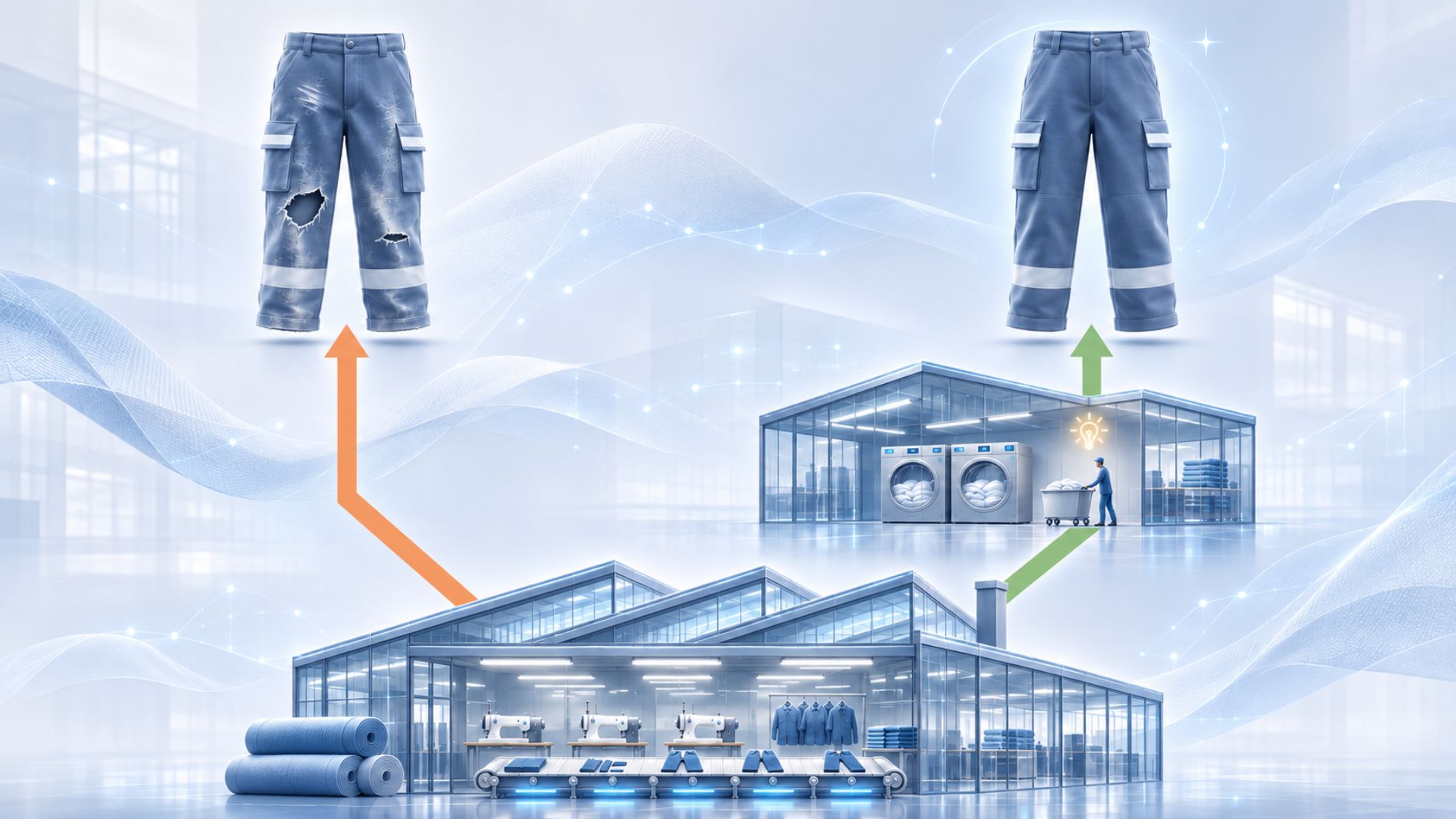
Lindström’s WorkerPro collection shows what this can look like in practice. The design team worked closely with the company’s own laundries. Their feedback led to a change to the front of the jacket, making the zip much quicker to replace. Since laundries carry out most routine repairs to the garments, their practical experience could be built directly into the design.
The CIRK-L project in Sweden also shows how the perspective of textile care can inform product design. The tool pockets on a pair of work trousers were made detachable. They can be removed before washing, making the trousers easier to clean and protecting the fabric from damage. In a related survey, 90 per cent of respondents said the trousers were easier to wash as a result.
A further example comes from the development of new workwear for the Danish healthcare sector. The study found that industrial processes could damage zips, while the pocket design made the garments difficult to process in the laundry. These findings led to changes to the fastenings and pocket construction to better meet the requirements of laundering.
Repairs must not compromise a garment’s protective properties or waterproofness. This highlights why these requirements need to be considered at the design stage.
How repair expertise can improve products and processes
The scale of the repair workload is clear from a figure reported by Lindström: the company repaired a total of 2.9 million textile items. This figure reflects the wealth of experience built up through repair work. Systematically recording that experience can provide practical insights for the next generation of products.
The washing process also plays a role, as shown in CWS’s 2020/21 Sustainability Report. Washing tests revealed that fabrics became rougher in one laundry than in another. The issue was identified in larger washing machines and with longer wash cycles. CWS then adjusted the cycle duration, with positive effects on both fabric quality and energy consumption.
Conclusion
The examples show that regular collaboration between laundries, manufacturers and textile service providers can drive positive change. Designing long-lasting workwear is only part of the process. Garments also need to prove themselves in everyday use, industrial laundering and repair. Through their experience, laundries have the knowledge needed to support this process. The earlier they are involved in product development, the sooner weaknesses can be identified and designs improved. The result is garments that stay in service longer and need replacing less often. Manufacturers, textile service providers and customers all benefit, as does the environment.