

Reading time: 3 minutes
Key takeaways
- Six European textile service companies are pooling end-of-life rental textiles and workwear for recycling.
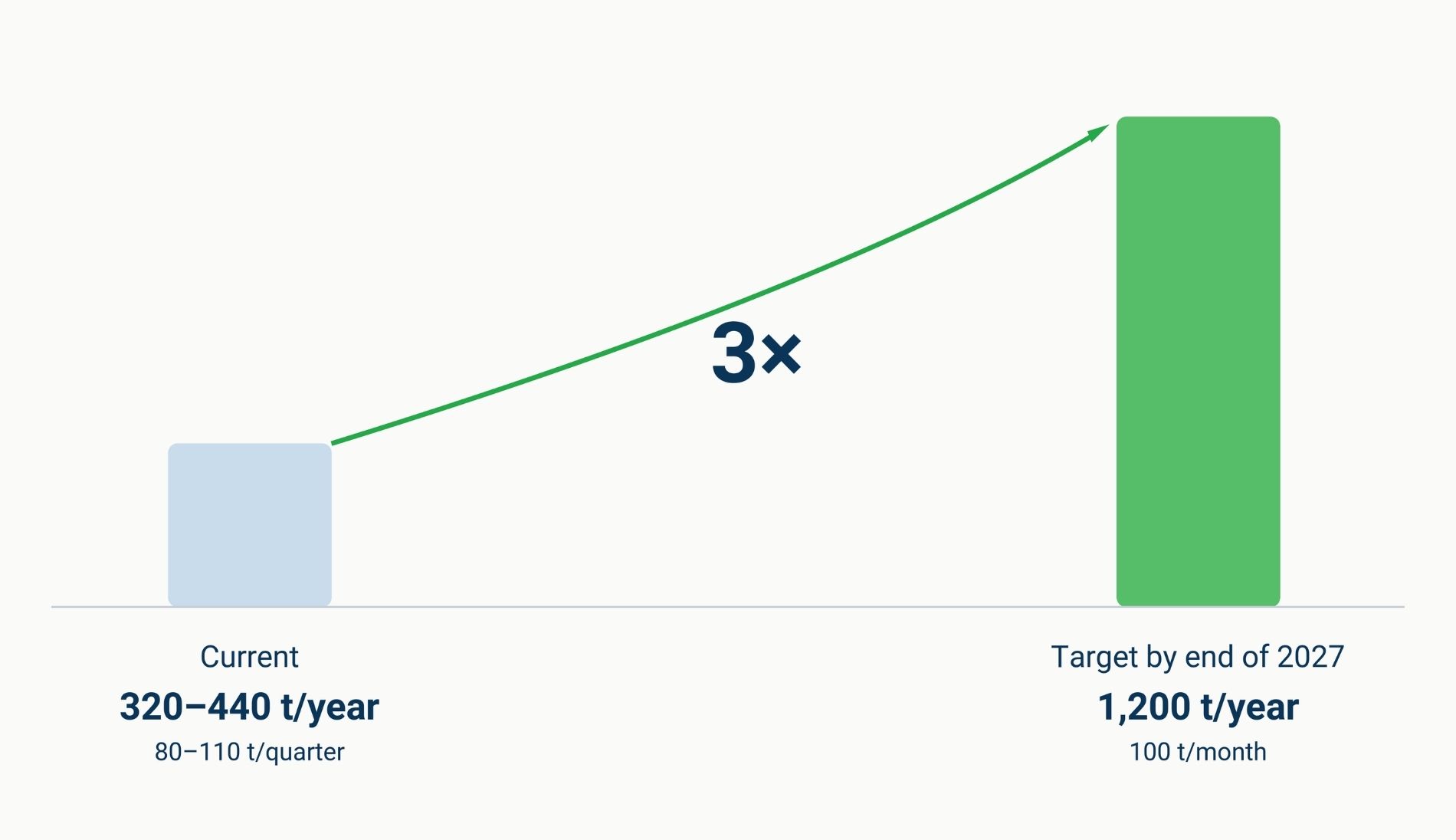
- LOOP-IT currently processes around 80 to 110 tonnes of textiles per quarter.
- By the end of 2027, the project aims to process 100 tonnes per month.
- The textiles are processed into insulation materials in Poland for construction and industrial applications.
- According to the project partners, the current open-loop recycling rate is 85%.
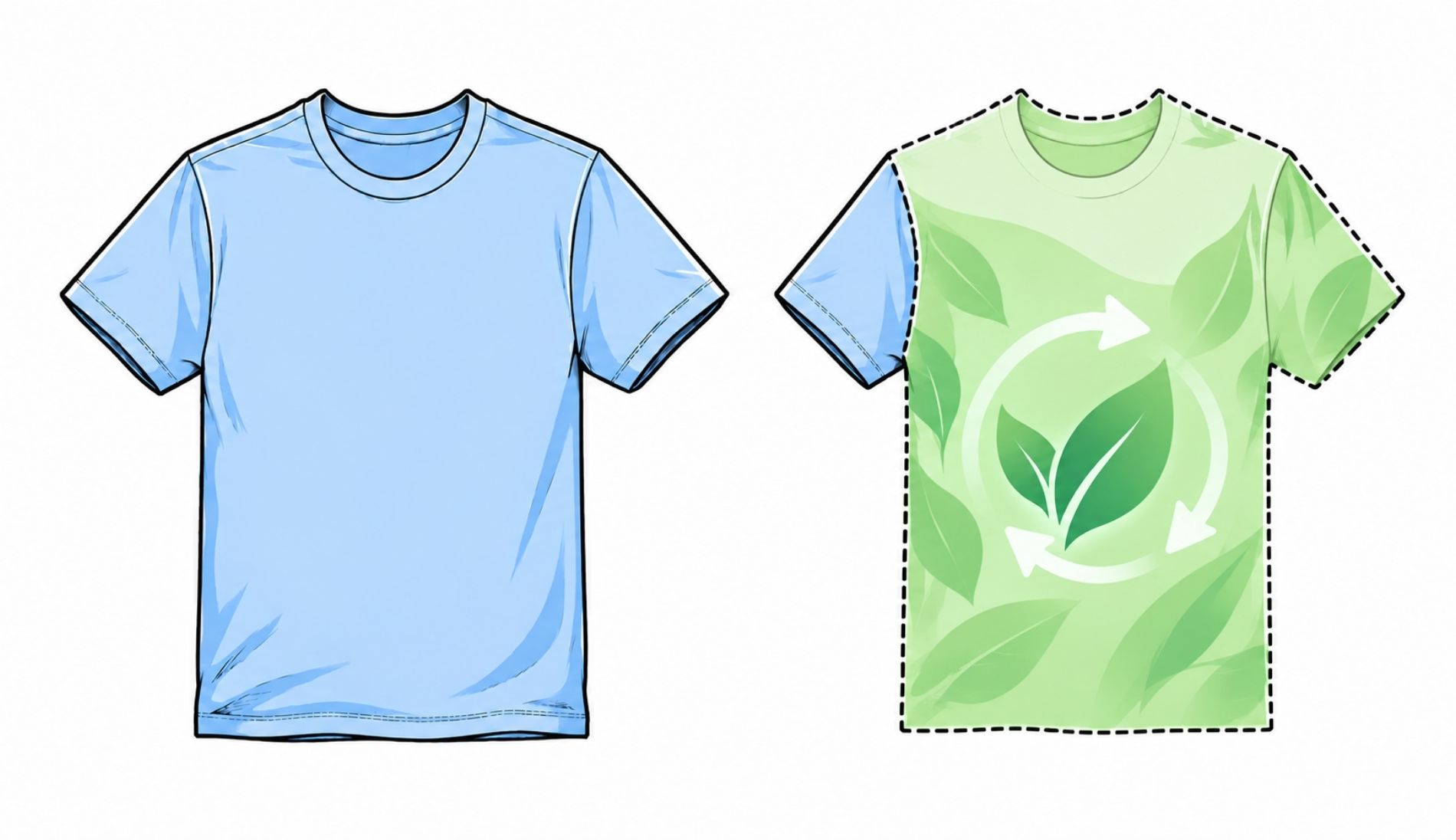
- The long-term goal is a closed loop: end-of-life workwear is to be turned back into new workwear textiles.
- The project shows how cooperation between competitors can enable industrial-scale circularity.
LOOP-IT stands for “Large-Scale Open-Loop Processing of Industrial Textiles”. As members of the European Textile Services Association (ETSA), ALSCO, BARDUSCH, CWS WORKWEAR, LINDSTRÖM, MEWA and SALESIANER are working together to take the recycling of professional workwear beyond isolated individual solutions and towards an industrial scale.
Six companies, one material stream
In their core business within the European textile services sector, the companies compete for customers. When it comes to end-of-life textiles, however, they share a common goal. The project illustrates a fundamental limitation of the circular economy:
Effective recycling requires the commitment and combined strength of several partners.
By pooling their efforts, the companies create a sufficiently large and reliable material stream for recycling, while continuing to compete independently in their respective markets.
The process
Once workwear reaches the end of its service life, it is collected across several EU countries, consolidated and transported to a recycler in Poland. There, the textiles are processed into insulation materials, primarily for construction and industrial applications such as the automotive sector. The recycler specialises in this process.
Other end uses would require different partners and are already being pursued individually by LOOP-IT members. At CWS, for example, recycled textile fibres are turned into new yarns for knitted and woven fabrics.
Only by combining material from several providers can LOOP-IT create the large, predictable streams needed for a continuous circular process. Around 80 to 110 tonnes are currently processed per quarter – equivalent to approximately 320 to 440 tonnes per year. By the end of 2027, the project aims to efficiently process 100 tonnes per month.
Collaboration instead of isolated solutions
“The two biggest challenges were convincing each company’s management of the value of the collaboration and aligning the different systems commonly used across the sector,” says Dr Mathias Nell, Head of Sustainability at SALESIANER.
What began at a meeting of the participating companies in Brussels has developed into a Europe-wide coordinated project. Its key innovation lies not only in the recycling technology, but above all in the organisation that makes it possible.
Recycling rate and results
The aim is to retain the material’s value as far as possible. The project processes complex, multi-material workwear textiles and, according to the partners, achieves an open-loop recycling rate of 85%.
The next step: closing the loop
From discarded trousers to a new shirt. From an open loop to a closed loop. This is the partners’ next major challenge: returning materials to the textile cycle as new workwear after a successful recycling process. According to SALESIANER, the project also plans to collect environmental data.
Open-loop vs. closed-loop recycling: a direct comparison
| Feature | Open-loop recycling | Closed-loop recycling |
|---|---|---|
| End product | A different product, for another sector or application | The same or an equivalent product |
| Material quality | Quality may decrease (This is known as downcycling) | Quality is largely retained |
| Number of recycling cycles | The number of cycles may be limited, particularly if quality decreases | The material can be recycled many times |
| Example | PET beverage bottles turned into polyester fleece jackets or packaging film | Aluminium cans, PET bottles, glass or copper cables recycled into new products made from the same material |
A project with the potential to set an example
The project demonstrates an approach with relevance far beyond the rental textile sector. Its underlying principle could also benefit industries such as fast fashion and home textiles: companies can collaborate where individual material streams are too small or fragmented to enable an industrial-scale solution on their own.
The European Environment Agency identifies a need for further development in collection, sorting and recycling. Since 2025, EU Member States have been required to establish separate collection systems for used textiles. But will European capacity be sufficient for these volumes? It is not yet clear how much material a recycling facility needs to operate effectively or what level of investment will be required. Projects such as LOOP-IT, however, show how textile recycling can work successfully and cost-effectively through constructive collaboration.