
Reading time: 4 minutes
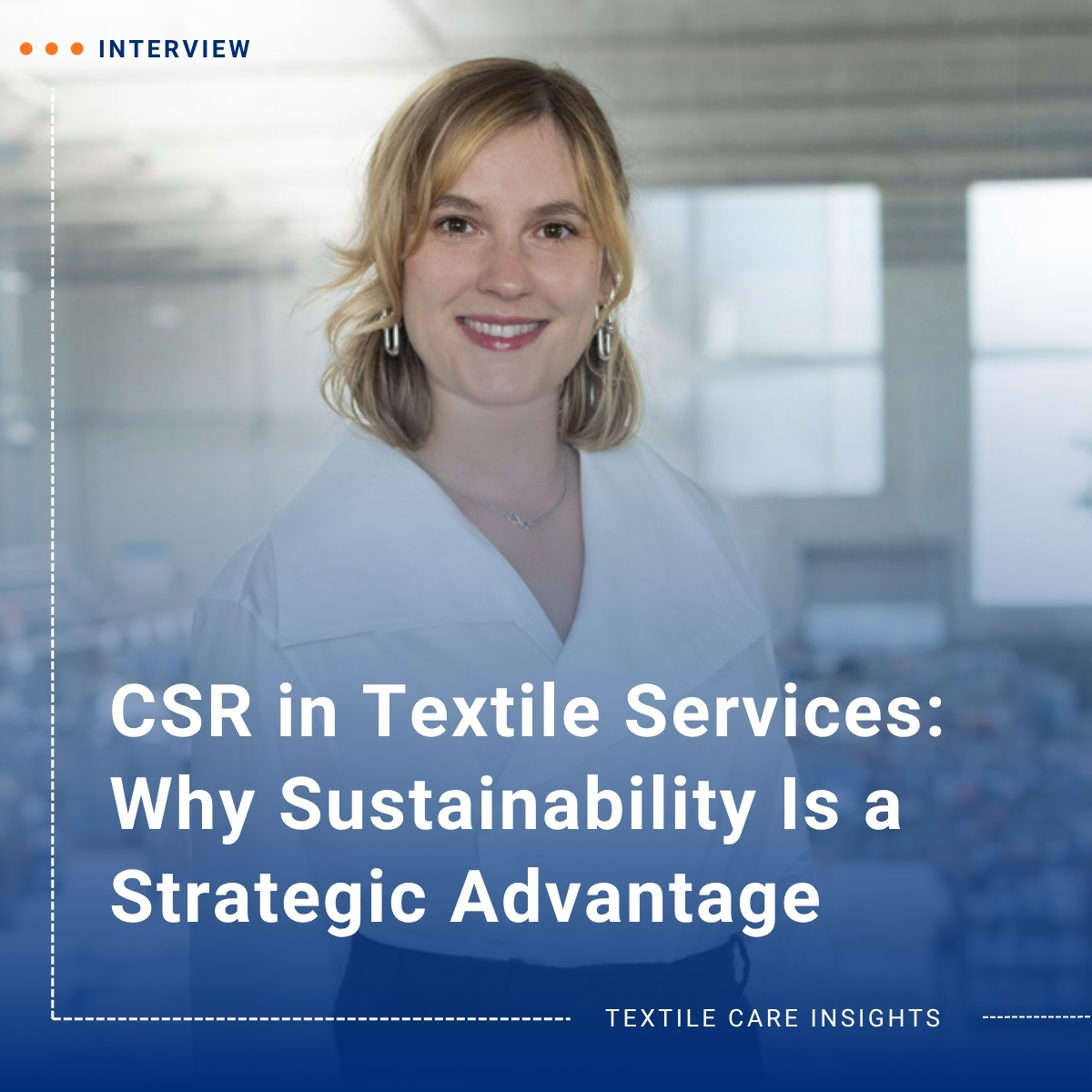
The textile industry is subject to increasingly stringent regulations, as set out in the EU Strategy for Sustainable and Circular Textiles, requiring companies to adopt more sustainable practices. As expectations of market participants continue to rise, corporate social responsibility (CSR) has become a key factor. Sustainable strategies are intended to minimise environmental and social impacts throughout the production, use and end-of-life phases, thereby helping to make the industry fit for the future. In this expert interview, Michaela Gnass, CSR Manager at contract textile specialist Dibella in Aalten, discusses her personal motivation as well as the responsibilities and challenges associated with her role.
Does a company need CSR management and, if so, why? What benefits does it offer?
Michaela Gnass: For many years, Dibella has represented social and environmental values both internally and externally. Today, we bring these together under the term “corporate due diligence”. Our sustainable corporate culture gives rise to a wide range of CSR activities that need to be coordinated – from further developing the compliance management system and implementing support projects in practice to ensuring supply chain compliance and preparing and carrying out audits.
The role therefore covers a broad range of responsibilities and involves close cooperation with colleagues, particularly in purchasing, sales and marketing. To ensure that all these strands come together in one place, clearly defined responsibility is essential – in the form of a dedicated CSR position.
Since when has Dibella had a dedicated CSR position?
Michaela Gnass: At Dibella, CSR is fundamentally a team effort, with every employee contributing in one way or another. The dedicated CSR position was established in 2018, and since 2024 our team has consisted of two people who work closely together and support one another.
What responsibilities fall within the scope of CSR management?
Michaela Gnass: We prepare reports, including our sustainability report, Dibella’s corporate carbon footprint and customer compliance questionnaires, and we are responsible for the audits required for our certifications. An increasingly important part of our work is the professional exchange with customers on sustainability topics and with suppliers regarding developments in their compliance practices. We also coordinate practical support projects through the GoodTextiles Foundation, which was established by Dibella.
Can CSR management influence environmental, economic and social development within a company and across the textile value chain?
Michaela Gnass: Our CSR management helps reduce environmental impacts, improve social standards throughout the supply chain and, at the same time, strengthen economic benefits such as risk reduction, competitiveness and customer trust.
It is also important to highlight the investments our key suppliers are making in the latest environmental and textile technologies. Our customers’ conscious decision to purchase responsibly produced textiles confirms that our consistent sustainability strategy is the right approach. In doing so, they are sending a clear signal to the market.
How does the company communicate its CSR commitment internally and externally? How do customers perceive the company’s CSR activities?
Michaela Gnass: At Dibella, CSR is actively supported by all employees. Internal communication therefore begins during the onboarding process and continues through regular updates in our Monday meetings. We also use digital tools to give customers insights into visits to our suppliers, as well as a document management system in which all CSR-related documents are stored and version-controlled. For external communication, we use our website, social media channels, press relations and our stakeholder magazine, waschecht. We support our customers with information, training and marketing materials that they can use in their own communications with end customers. We also offer customers the opportunity to accompany us on visits to our suppliers or to participate in social and environmental support projects in textile-producing countries. In this sense, our CSR commitment also becomes part of our customers’ own CSR activities - and the response from them has been consistently positive.
What factors limit a company’s CSR efforts?
Michaela Gnass: The main limitations arise where economic and regulatory conditions restrict the implementation of our CSR measures. For example, putting sustainable initiatives into practice can be challenging in a highly price-driven market environment. As we cannot change market mechanisms on our own, we sometimes have to find pragmatic compromises. Nevertheless, we are convinced that long-term partnerships, transparency and ongoing dialogue enable us to achieve continuous improvements in CSR over time.
What future responsibilities do you see for CSR management?
Michaela Gnass: There is growing demand for key performance indicators (KPIs) that measure a company’s environmental and social impact. These include carbon footprint calculations, such as product life cycle assessments, as well as sustainability rating platforms like EcoVadis. In addition, the requirements of existing and forthcoming regulations will continue to create new responsibilities for CSR management.
If you had the opportunity, what would you change or improve in the field of CSR?
Michaela Gnass: My wish would be to create more room for effective CSR measures instead of extensive documentation. To achieve this, we need clear, practical and harmonised legal requirements for the B2B sector across Europe, along with easy-to-understand implementation guidance and practical guidelines.
Another challenge is the lack of broad recognition of existing certifications. Although many of them cover the same topics, different documents are often requested. Greater standardisation could eliminate unnecessary duplication of effort, leaving more time for implementing environmental and social projects in our sourcing countries.
What do you personally enjoy most about your role?

Michaela Gnass: I am particularly fascinated by topics related to organic Fairtrade cotton. One experience that had a lasting impact on me was visiting the farmers of the Chetna Cooperative in India. There, I learned how important a healthy ecosystem is – and that we are all part of it. The experience inspired me personally to lease a small plot of land where I now grow and harvest organic fruit and vegetables using mixed-cropping methods.
Equally important to me is the respectful intercultural and personal exchange with customers and suppliers. The best solutions are often found on site through open conversations and careful listening. Only by getting to know the people, their culture and their environment can we build genuine awareness and understanding.