
Reading time: 4 minutes
Key Takeaways
Nedlin’s new hospital laundry facility in Elsloo (NL) is one of the most modern in Europe. Hospital and workwear textiles are processed efficiently using AI, robotics and automated processes. At the same time, the facility is setting new standards in sustainability through water recycling, heat recovery and a 45% reduction in CO₂ emissions.
Nedlin’s headquarters are located in the border triangle where the borders of the Netherlands meet those of Belgium and Germany. Originally founded in 1952 as a coin laundry, the company has long since grown into a major textile services provider in the Netherlands. From two sites, the family-run business supplies Dutch hospitals and industrial companies, as well as hotels in the Netherlands, Germany and Belgium. Due to steady growth across all sectors, the company is constantly expanding: in 2018 and 2019, capacity for processing workwear for industrial clients was expanded, and in September 2023, a completely new hospital laundry facility was commissioned. It was built across the road from the company’s headquarters in Elsloo.
The new laundry facility was launched back in February 2021, in the midst of the COVID-19 pandemic. During the pandemic, the weekly laundry requirements of Dutch hospitals rose from 300 tonnes of workwear and textiles to 500 tonnes. This increase pushed Nedlin’s laundry to its limits – capacity at the original premises had been completely exhausted. The two owners therefore decided to build a new facility dedicated exclusively to the processing of hospital textiles. The brothers had big plans: they aimed to create a state-of-the-art, sustainable laundry facility covering an area of 20,000 m², where automation, artificial intelligence (AI) and smart process technologies would be optimally utilised for the benefit of both people and the environment.
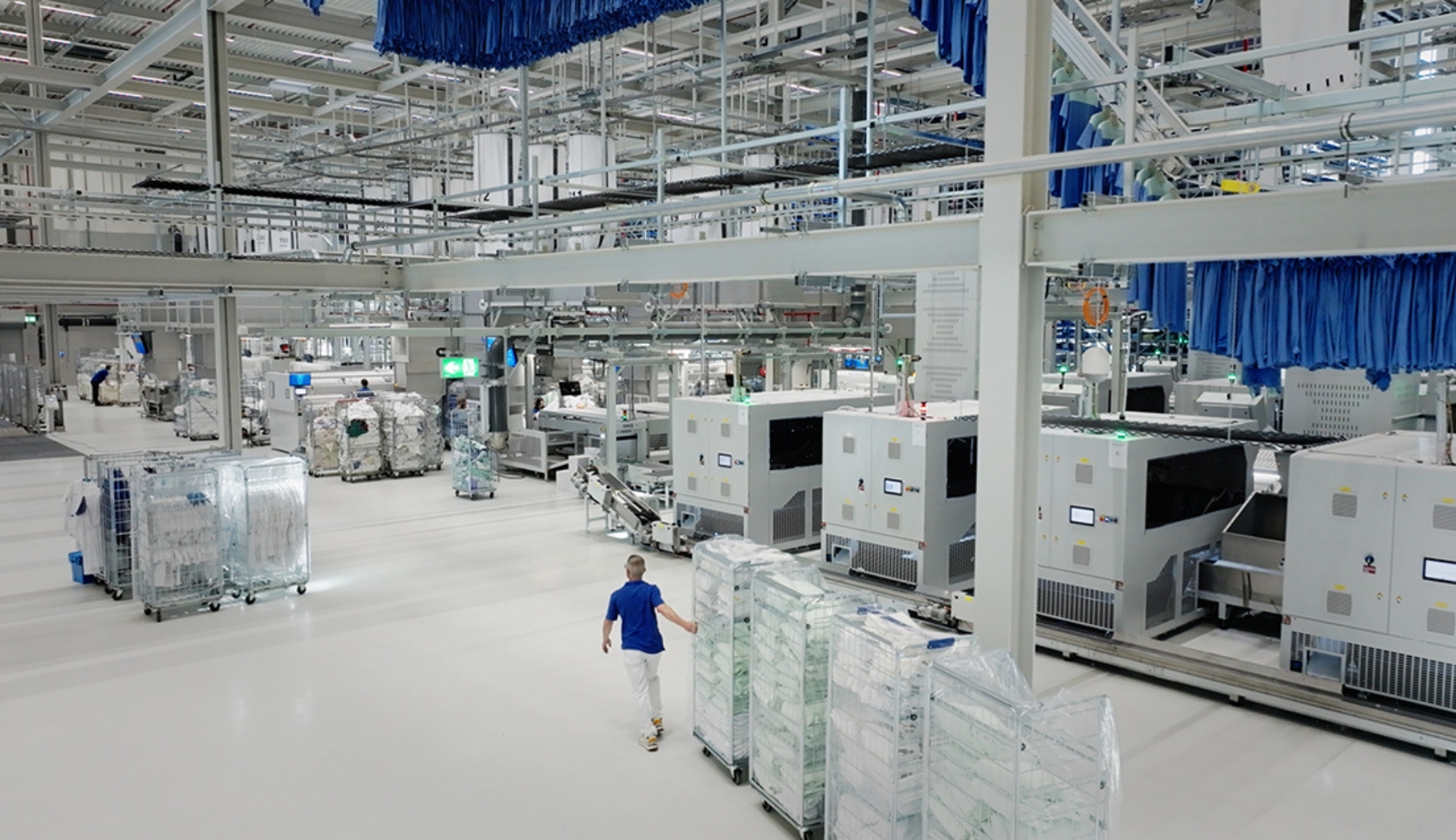
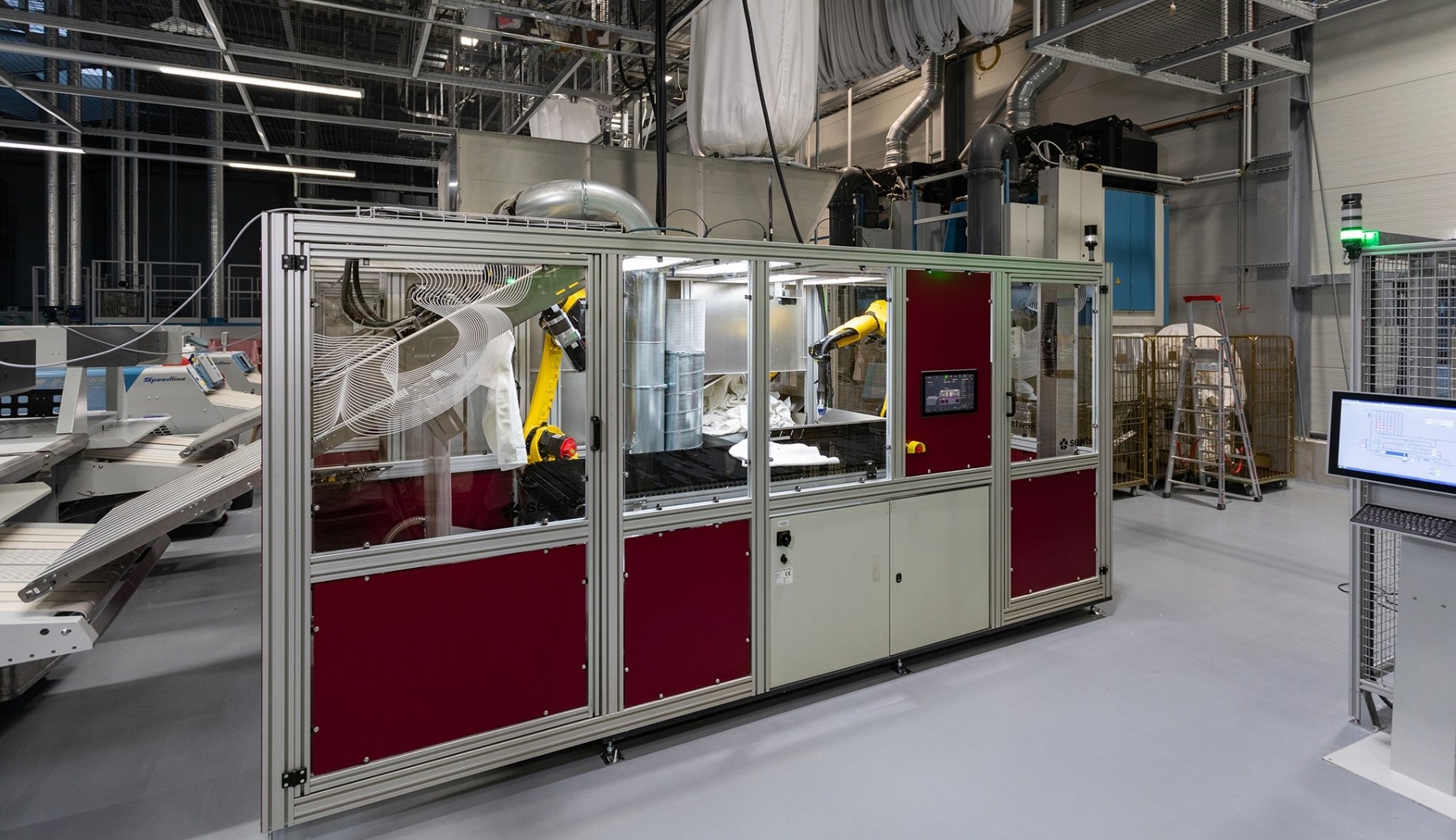
The plan has paid off: just like in a science-fiction film, robots and an autonomous storage system that reaches right up to the ceiling of the huge hall handle a large part of the work. In doing so, the company has responded to a particularly pressing problem: as is the case almost everywhere in Europe, the Netherlands also faces a shortage of workers to ‘lend a hand’ with the numerous stages of the process. Wherever technically possible, owners Stef and Luuk de Win have therefore opted for automation. This begins as early as the laundry sorting stage. Here, the workwear and uniforms delivered from the clinics are screened for items that should not enter the washing process: eight robots separate the delivered laundry and feed it into an image recognition system. The process is similar to a security check at an airport. The technology visualises foreign objects such as pens, keys, stethoscopes, infusion bottles, etc., and uses AI to divert the affected garments from the process. Staff then take charge of the item in question, remove the objects left behind and return it to the regular process.
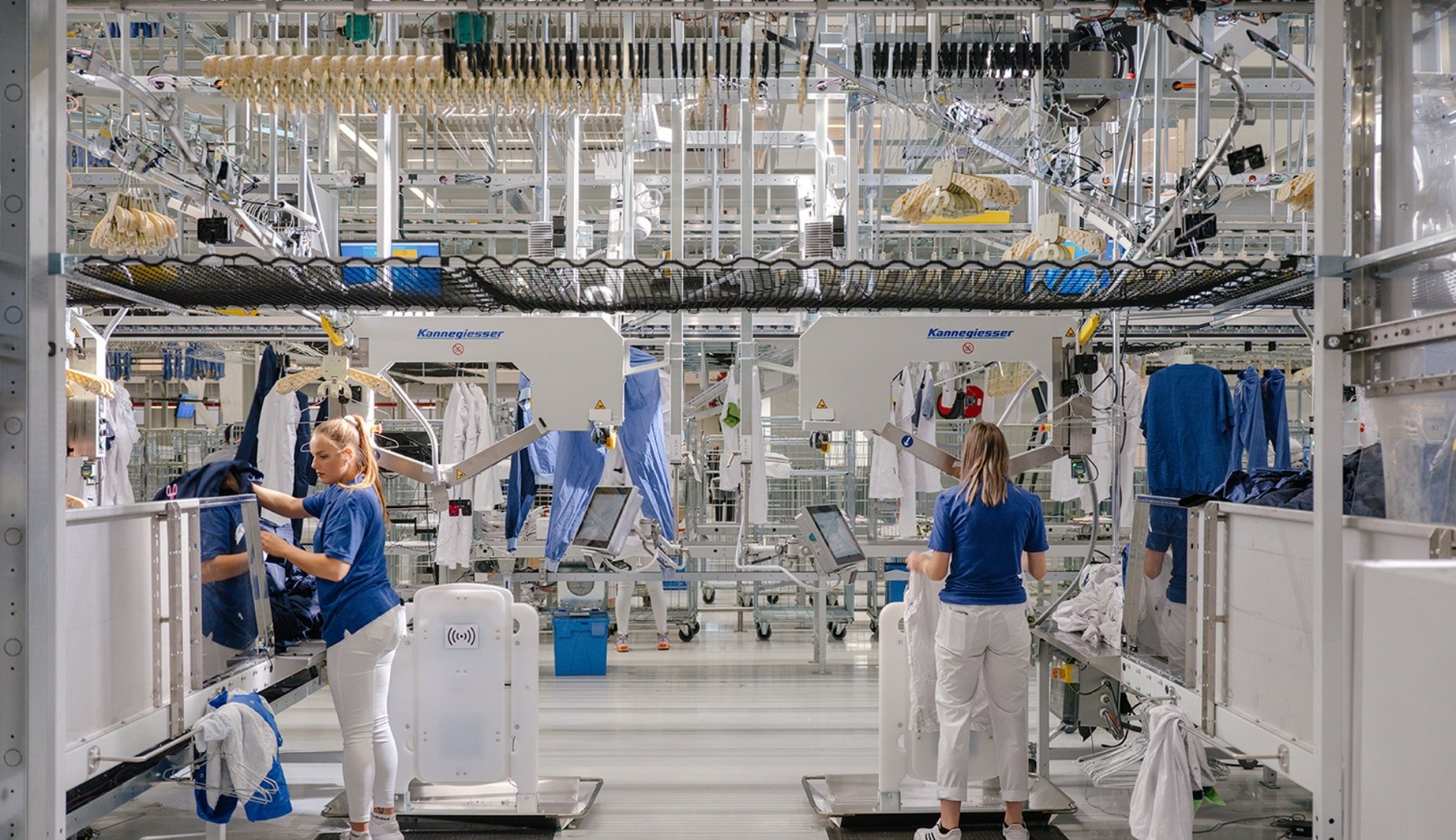
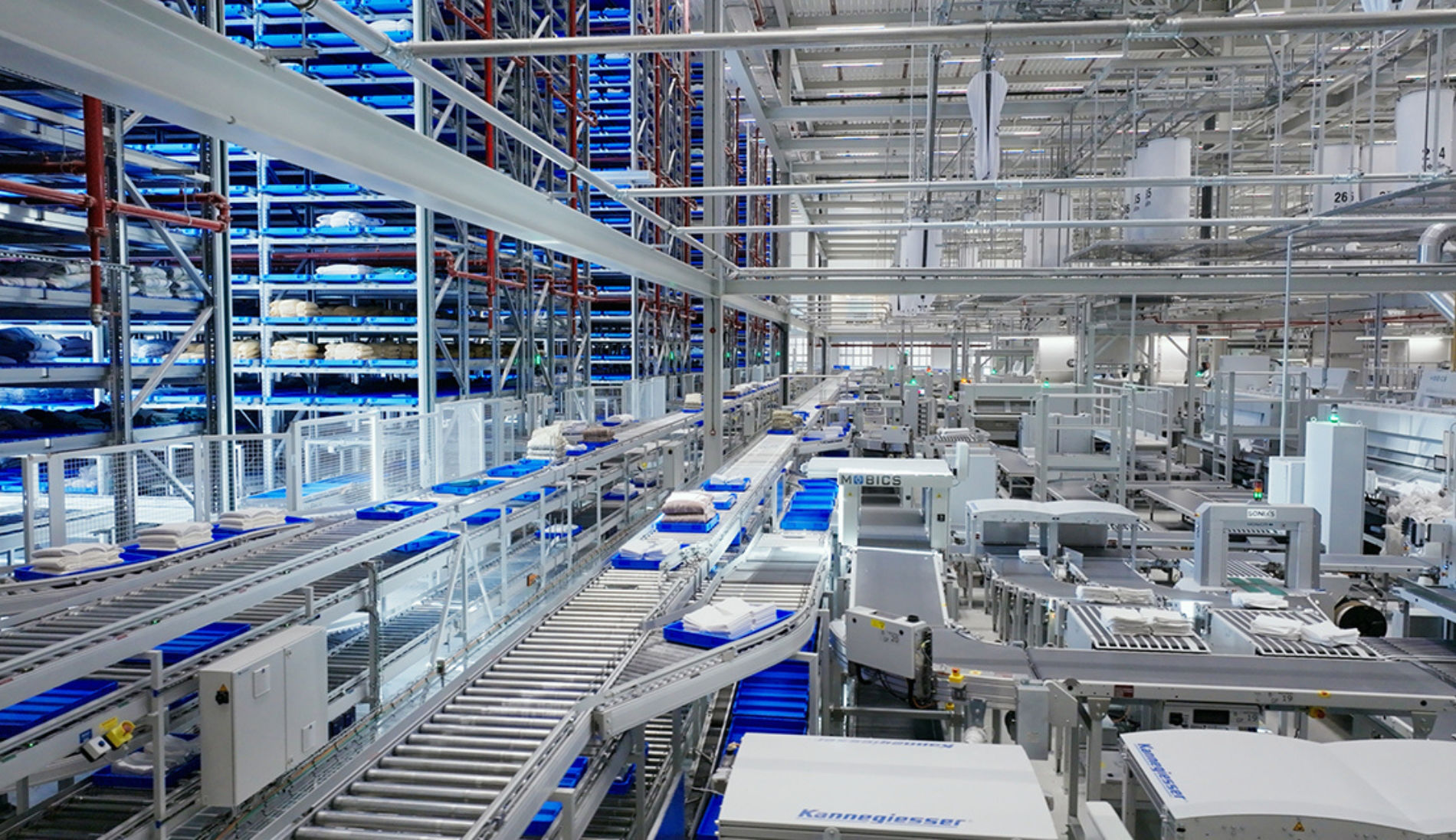
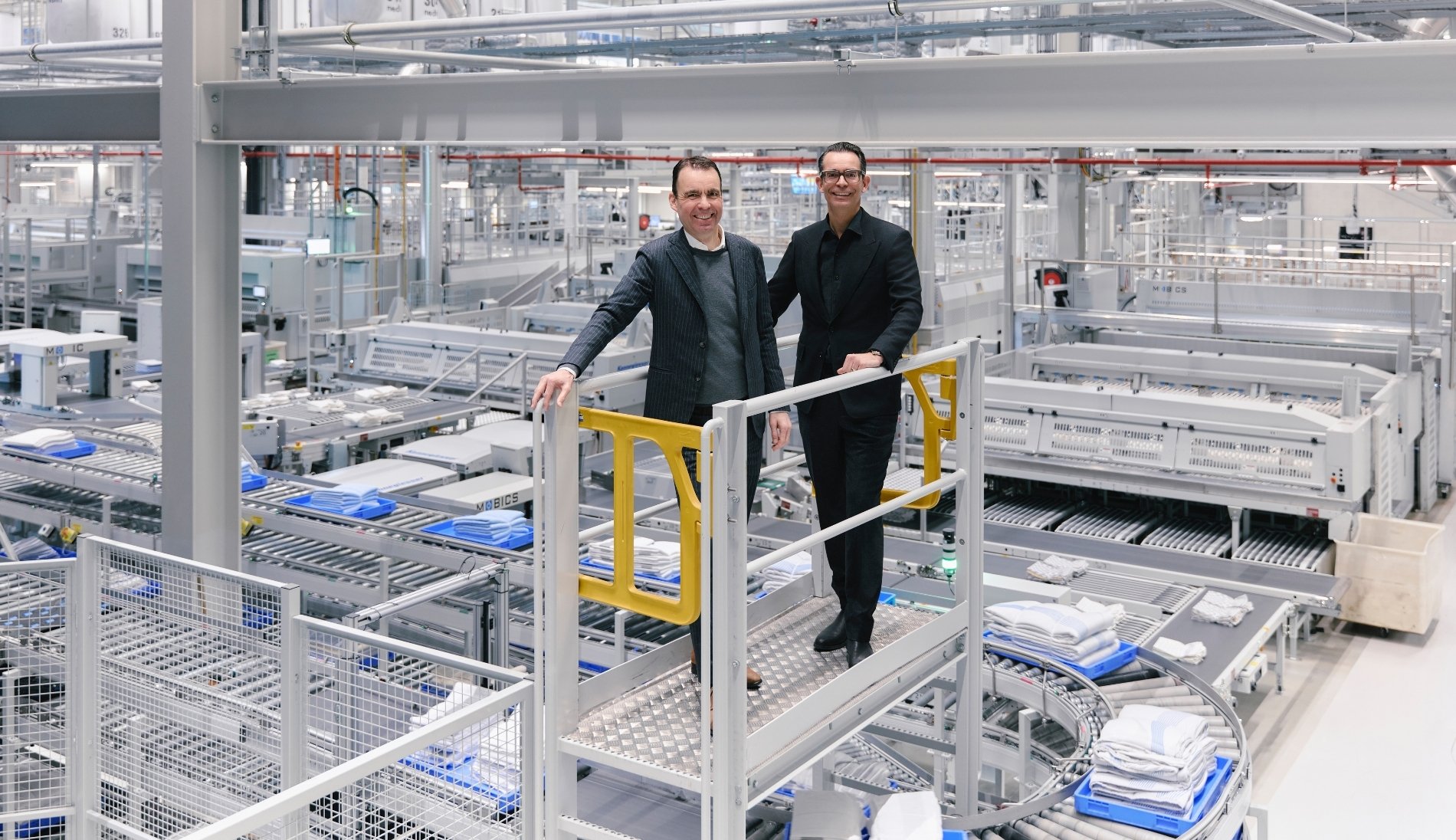
The sorted goods are then fed fully automatically through the washing and drying process. Next comes the folding stage. Nedlin uses robots for this too; they fold terry towels, stack them and tie them into compact bundles. The bundles are then transported on a conveyor belt to the storage section and sorted into designated compartments. A merchandise management system records stock levels in real time. Using a ‘first in, first out’ system, it ensures an even withdrawal of the laundry and prevents the accumulation of ‘dead stock’.
Thanks to the high level of automation, Nedlin has relieved staff of all ‘heavy’ work; traditional manual labour is now virtually non-existent in the facility. “Thanks to the robots, we have achieved a significant improvement in ergonomic working conditions,” says Gert Kaps from the Hospitality management team. “What’s more, they can be deployed 24/7, which is why we can do without night and weekend shifts at our new facility. However, we are also committed to creating attractive workplaces and providing the best possible support for our staff in other areas. For instance, the air conditioning in the new hall is designed to maintain consistently pleasant temperatures in both summer and winter. The building has been particularly well insulated for this purpose – it meets the ‘Outstanding’ rating under the Building Research Establishment Environmental Assessment Methodology (BREEAM) – and is equipped with an intelligent ventilation system. This ensures a supply of fresh air and removes the heat generated by the processing operations as well as any summer heat. This allows us to create a pleasant climate in the hall. We have also installed numerous windows that let natural light into the building, thereby contributing to the well-being of our employees.” To make getting here as easy as possible, Nedlin is well connected to public transport and has its own car-sharing scheme.
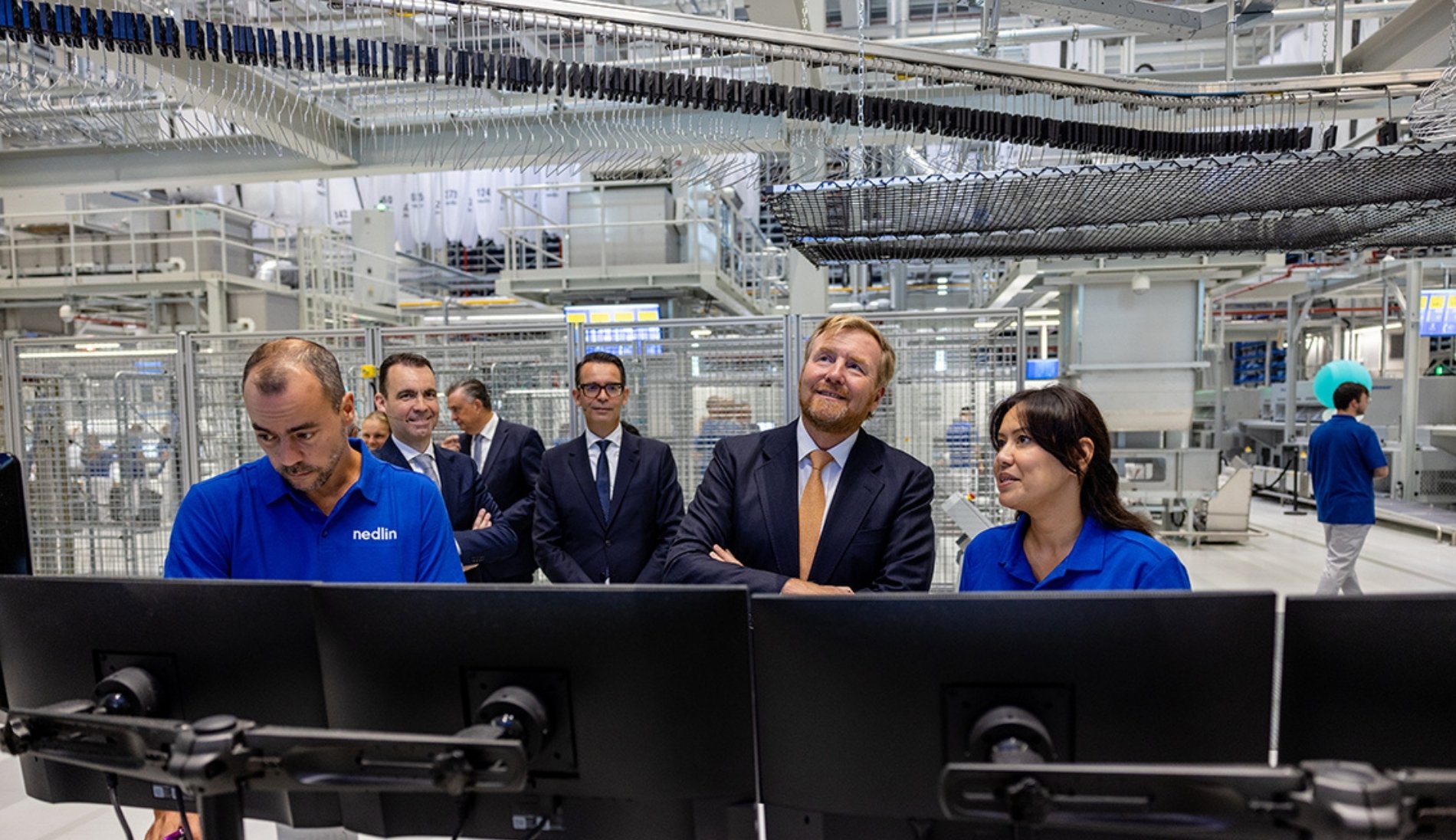
The new laundry facility also sets new standards in terms of resource consumption and CO₂ emissions. A huge solar park has been installed on the roof of the hall. With its 2,568 solar panels, it can generate up to 1,170 kWh (1,168,440 watts peak (Wp)) per year, which is used, amongst other things, to preheat process water. The second major factor in reducing greenhouse gas emissions is heat recovery. The waste heat from the dryers and mangles is channelled through heat exchangers, where the hot exhaust air is used to heat the wash water. The wastewater itself is collected and converted back into process water using state-of-the-art water treatment, during which some of the chemicals are also recovered and filtered rainwater is added. Thanks to further measures, Nedlin’s newest facility has achieved an impressive environmental footprint. “We consume 0 litres of fresh water per year, save up to 22,500 GW of electricity and reduce our CO2 emissions by 45% compared to 2019. We are very proud of that,” says Gert Kaps. King Willem-Alexander of the Netherlands saw it that way too: he officially opened Nedlin’s new laundry facility in September 2023!
This article first appeared in issue 1/2024 of Dibella’s customer magazine “waschecht” and has been kindly made available to Messe Frankfurt for publication.